
In the world of digital products, a website is no longer just a static page; it is a dynamic engine that drives business value. At Momentum Squads, we often see companies hit a "technological ceiling" where their initial web solution cannot handle increasing traffic or the complexity of new business processes. This is where the transition from a traditional website to a high-performance web platform becomes critical. Our focus is on building systems that don't just exist but evolve, supporting your expansion into new markets and service models.
Planning a scalable platform? Explore our SaaS and web platform development services — multi-user architecture, billing, dashboards, and AI modules built to scale with you.
Website vs Web Platform: Where the "Ceiling" Actually Is
A website presents information; a web platform runs processes. The difference shows up in the details: user accounts and roles instead of anonymous visitors, workflows and transactions instead of static pages, integrations and data pipelines instead of contact forms. Most growing companies cross this line gradually — a booking module here, a client dashboard there — until the original architecture starts to resist every new feature.
The warning signs are remarkably consistent across industries: pages slow down under seasonal traffic; simple changes take weeks because everything is coupled to everything; your team maintains spreadsheets alongside the site because the site cannot hold the actual process; a new market or language means duplicating work instead of configuring it. If two or three of these sound familiar, you are not fighting bugs — you are fighting architecture.
The Architecture of Scalability
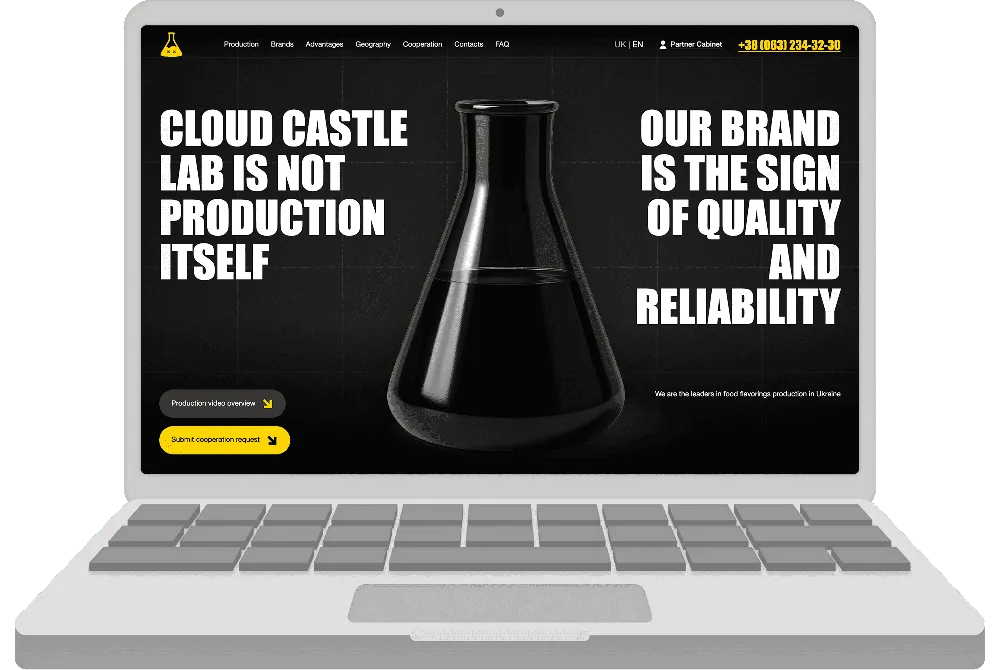
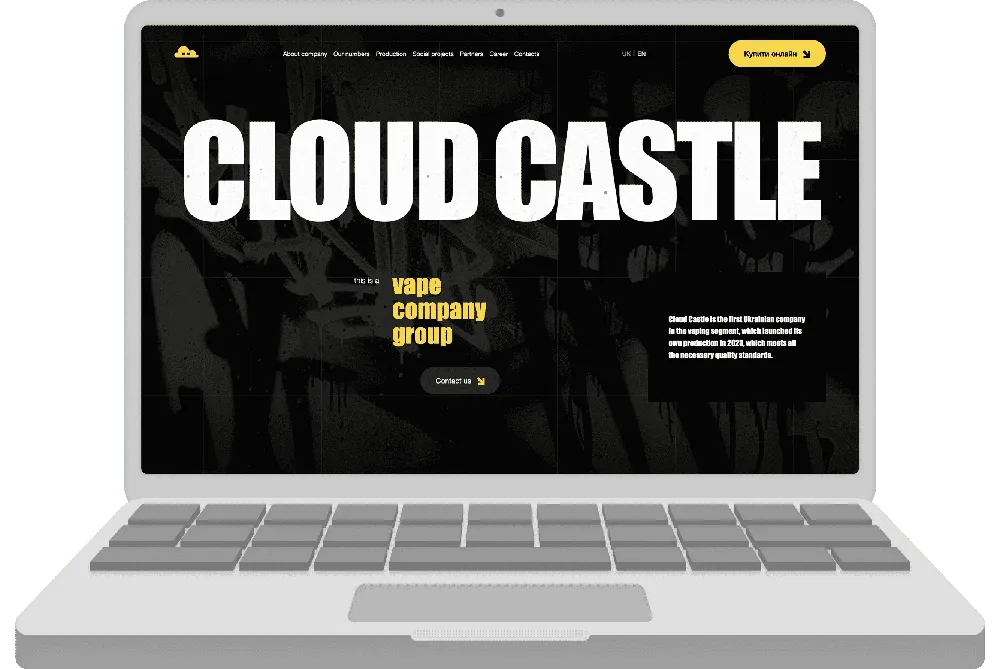
Scalability is the ability of a system to handle growth—whether it's a tenfold increase in users or a massive influx of data—without losing performance. Using a powerful backend stack like Python and FastAPI, we build asynchronous architectures designed for high loads. For instance, creating a robust infrastructure for a manufacturing leader like Cloud Castle Lab requires more than just a beautiful interface; it demands a system that can process complex data and provide flawless stability. By choosing Next.js and Tailwind for the frontend, we ensure that while your backend handles heavy logic, the user experience remains lightning-fast and responsive on any device.
In practice, scaling is less about one big server and more about the right separation of concerns. Heavy operations move to background queues so the interface never waits; frequently-read data is cached; the database is designed around real query patterns rather than convenience; and services that grow at different speeds — say, payments and messaging — are split so they can be scaled and deployed independently. That is exactly how we built BorisDoes, a freelance marketplace serving 3,000+ users: a microservice core with real-time WebSocket messaging that keeps conversations instant even under load.
Multi-User Architecture, Billing, and the SaaS Feature Set
A platform earns its keep when it can serve many kinds of users at once: customers, managers, partners, administrators — each with their own access levels, dashboards, and limits. Underneath sit the systems nobody notices until they fail: secure authentication, subscriptions and billing, notifications, audit trails, and admin panels that let your team run the business without a developer on call.
Payments deserve special attention, because money flows are where "just a website" breaks first. For Felen, a donation and monetization platform for content creators, we combined fiat and crypto payments, recurring donations, a merch shop, and real-time WebSocket events — all on a microservice architecture designed for a global audience. The lesson generalizes well: transactions, real-time features, and third-party integrations are precisely the places where platform architecture proves its value.
Data is the other quiet differentiator. A platform should not just store records — it should show your team what is happening: conversion funnels, cohort behavior, operational bottlenecks. We design dashboards and event tracking into the product from the start, so decisions are made on numbers rather than intuition.
Driving Business Value through Growth-Ready Tech
We apply a Product Thinking approach to every project. This means we prioritize features that automate manual operations and reduce long-term costs. A key element of our scalable platforms is the implementation of custom, flexible CMS solutions. This empowers your internal team to manage content, SEO, and business data in real-time without constant developer intervention. A scalable platform is an investment in your company’s future agility—allowing you to integrate AI tools, sync with CRM systems, and test new business hypotheses with minimal friction and maximum speed.
That agility compounds over time. When the platform exposes clean APIs and a well-structured data model, every next initiative gets cheaper: launching a partner program becomes a permissions change, not a rebuild; adding an AI assistant means connecting a module to data that is already organized; entering a new market is configuration — currencies, languages, tax rules — rather than a fork of the codebase.
Reliability at Scale: What "Enterprise-Grade" Actually Means
Growth punishes fragile systems at the worst possible moment — during the ad campaign, the seasonal peak, the press mention. That is why every platform we ship includes monitoring and alerting, automated backups, load-optimized queries, and a deployment pipeline that releases updates without downtime. Security is layered in from the start: secure authentication, role-based access control, and isolation between services, so a single compromised component cannot expose the whole system.
What Does a Scalable Platform Cost?
There is no honest one-size price tag, but the cost drivers are predictable: the number of user roles and workflows, payment and third-party integrations, real-time features, data migration from existing systems, and the reliability bar you need to hit. A platform built to validate a business model costs a fraction of one built for a regulated industry — which is why we scope in phases rather than quoting a monolith.
The more useful question is the return side: what do slow pages, manual operations, and postponed features cost you every month? In our experience, when a company already feels two or three symptoms from the checklist above, the platform investment usually pays for itself through recovered conversions and freed-up team hours — well before the growth it was designed to enable arrives.
When to Invest — and How to Start Without a Full Rewrite
The good news: moving to a platform rarely means throwing everything away. We usually start with a short discovery phase to map your processes and bottlenecks, then extract the highest-pain area first — bookings, payments, a client cabinet — and grow the platform around it iteratively. The existing site keeps working while the new core takes over piece by piece, which keeps both risk and budget under control.
The cost of waiting is real but quiet: conversions lost to slow pages, hours burned on manual operations, features postponed because the codebase resists change. Companies rarely notice the technological ceiling until they hit it mid-growth — which is precisely when there is the least time to fix it.
If you are planning that transition, see how we approach SaaS and web platform development, browse our portfolio of platforms in production, or drop us a message — we will map your situation to a concrete architecture in one call.
Frequently asked questions
When should a business move off shared hosting?
When your site stops being pages and starts being processes. Shared hosting suits content sites; once you have logged-in users, payments, background jobs, or seasonal traffic peaks, you need an environment you control — a VPS or cloud setup with worker processes, a managed database, and room to scale horizontally. Pages slowing down under an ordinary marketing campaign are usually the first hard signal.
How can we tell the platform won’t survive growth — before it fails?
Measure instead of guessing. Load-test the critical paths — checkout, login, search — at a multiple of today’s peak traffic, watch database query times as data volume grows, and monitor error rates during campaigns. If response times degrade non-linearly — a small increase in load causing a large slowdown — the limit is the architecture, not the server size.
Should we rebuild from scratch or refactor what we have?
A full rebuild is justified only when the current stack blocks the business itself: an unsupported technology, no test coverage, every change breaking something unrelated. Otherwise refactor incrementally — carve the most painful area into a new, properly designed core and migrate the rest in slices without stopping operations. Within our website development services we take that second path almost every time: it delivers value earlier and carries far less risk.
What does “scalable architecture” mean in concrete terms?
A short checklist: stateless application servers you can multiply behind a load balancer; background queues for slow work; caching for frequently read data; a database with indexes and replicas designed around real query patterns; and services that deploy independently of each other. If each of those elements can grow on its own, the system scales; if everything lives in one process, it doesn’t.
How long does re-platforming take?
It depends on how much of the system has to move and how many integrations come with it — payments, CRM, and data migration usually set the scale. The phased approach changes the shape of the answer: the first extracted module goes live early and starts paying for itself immediately, while the full transition proceeds in stages behind it — without taking the existing site offline.
Frequently asked questions
When should a business move off shared hosting?
When your site stops being pages and starts being processes. Shared hosting suits content sites; once you have logged-in users, payments, background jobs, or seasonal traffic peaks, you need an environment you control — a VPS or cloud setup with worker processes, a managed database, and room to scale horizontally. Pages slowing down under an ordinary marketing campaign are usually the first hard signal.
How can we tell the platform won’t survive growth — before it fails?
Measure instead of guessing. Load-test the critical paths — checkout, login, search — at a multiple of today’s peak traffic, watch database query times as data volume grows, and monitor error rates during campaigns. If response times degrade non-linearly — a small increase in load causing a large slowdown — the limit is the architecture, not the server size.
Should we rebuild from scratch or refactor what we have?
A full rebuild is justified only when the current stack blocks the business itself: an unsupported technology, no test coverage, every change breaking something unrelated. Otherwise refactor incrementally — carve the most painful area into a new, properly designed core and migrate the rest in slices without stopping operations. Within our website development services we take that second path almost every time: it delivers value earlier and carries far less risk.
What does “scalable architecture” mean in concrete terms?
A short checklist: stateless application servers you can multiply behind a load balancer; background queues for slow work; caching for frequently read data; a database with indexes and replicas designed around real query patterns; and services that deploy independently of each other. If each of those elements can grow on its own, the system scales; if everything lives in one process, it doesn’t.
How long does re-platforming take?
It depends on how much of the system has to move and how many integrations come with it — payments, CRM, and data migration usually set the scale. The phased approach changes the shape of the answer: the first extracted module goes live early and starts paying for itself immediately, while the full transition proceeds in stages behind it — without taking the existing site offline.