In today's fast-paced digital economy, Artificial Intelligence has moved from being a luxury to a strategic necessity. At Momentum Squads, we don't just "implement AI" — we integrate intelligence into your business processes to eliminate bottlenecks. Our approach is based on the synergy of LLMs (Large Language Models) and custom business logic, creating solutions that think, act, and scale.
Exploring AI for your business? Start with our AI software development services — chatbots, support assistants, and automation modules integrated with your existing systems.
Where AI Automation Pays Off First
Not every process deserves an AI layer. The best candidates share three traits: high volume, repetitive structure, and a real cost of delay. Think of candidate screening during a hiring surge, order-status questions in retail, first-line support tickets, appointment scheduling. Automating one such process end-to-end beats sprinkling "AI features" across ten.
We are equally clear about where AI does not belong yet: decisions with legal weight, edge cases that need human empathy, and processes your team has not standardized. AI amplifies a process — including a broken one. That is why every engagement starts by mapping the workflow before a single prompt is written.
Automating Human Interactions
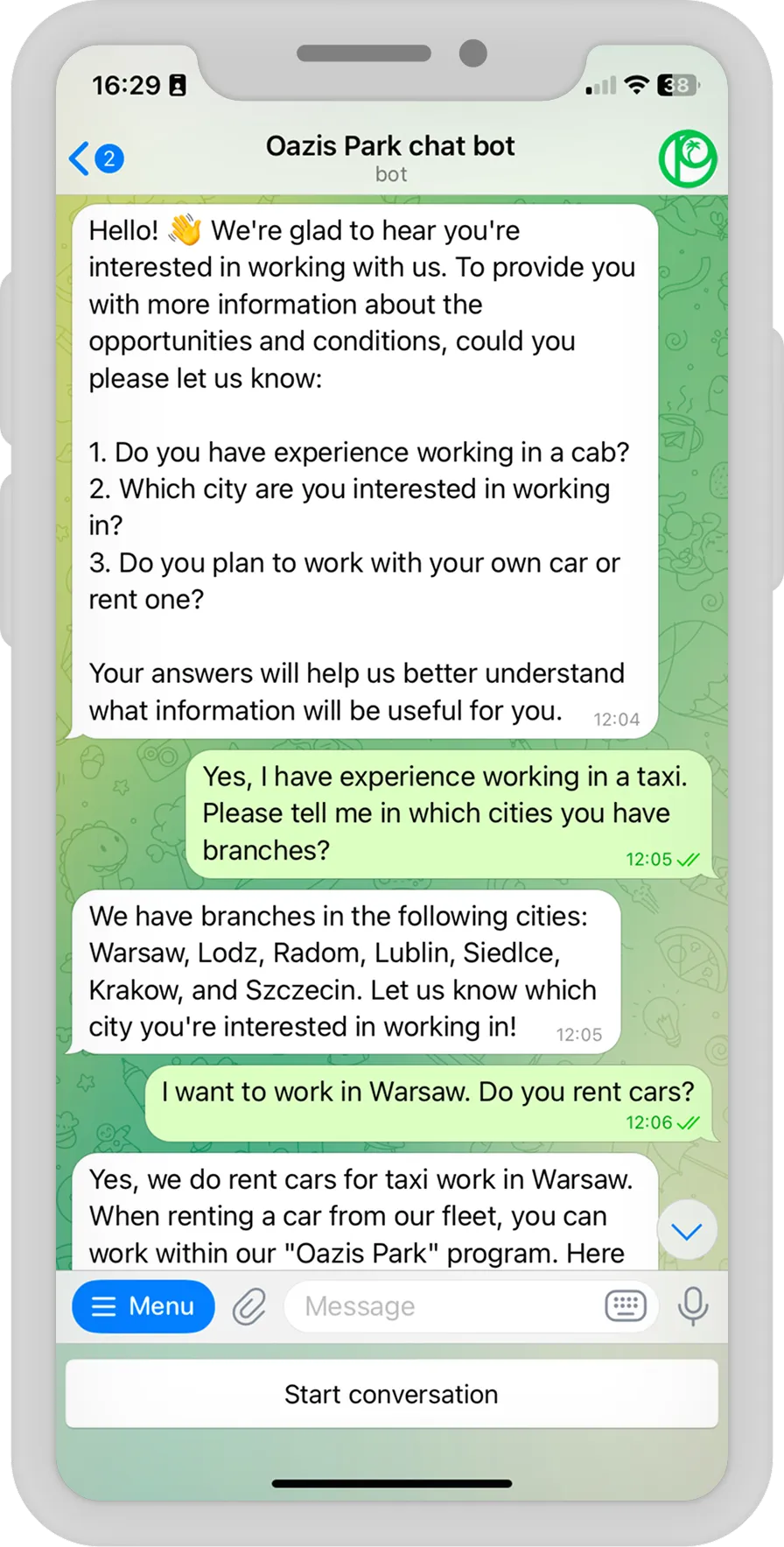
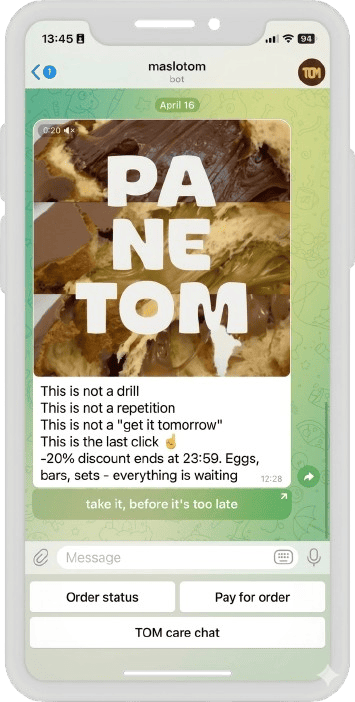
One of the most powerful applications of our AI Squad is transforming how businesses communicate. For Oazis Park, we developed an AI recruiting bot that works 24/7, handling thousands of candidates simultaneously, screening them, and scheduling interviews without a single human intervention. Similarly, for Maslotom, we took customer support to the next level by creating an AI assistant that provides instant, expert-level responses, significantly reducing the load on human operators while increasing customer satisfaction.
The pattern behind both projects is the same: the assistant handles the predictable majority of conversations around the clock and hands over to a human the moment confidence drops. For Oazis Park, recruiters stopped drowning in first-contact chats and now step in only for qualified candidates. For Maslotom, the assistant absorbed the bulk of routine requests — an 80% lift in the support metrics — while keeping a clean escalation path for everything unusual.
From Conversations to Conversions
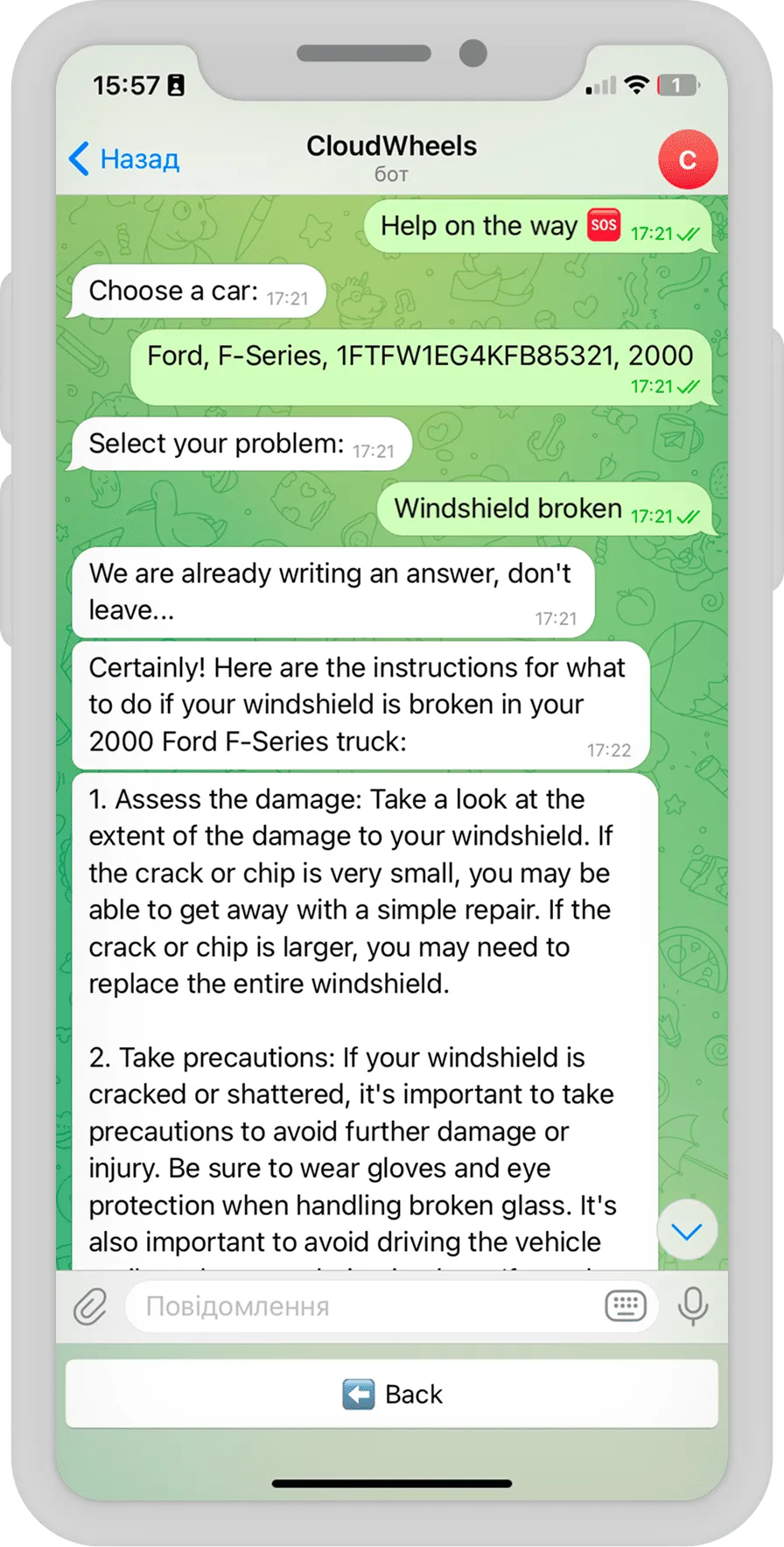
AI is a game-changer for retail and service industries. Our project for CloudWheels demonstrates how an AI chatbot integrated with a CRM can manage an entire auto service workflow — from initial inquiry to booking and follow-up. These aren't just scripted bots; they are intelligent agents that understand intent and context. Whether it's a high-load platform or a niche service, our AI solutions are built to be robust, secure, and ready to evolve. We help businesses stop fighting fires and start managing growth by letting AI handle the routine, so your team can focus on the extraordinary.
Retail shows the compound effect best. The CloudWheels assistant did not just answer questions — it drove a ×4 increase in upsells by suggesting the right service at the right moment, straight from CRM data. The CC chatbot turned Telegram into a full sales channel that processed over $5M for a retail brand across 59 stores. If your customers already live in messengers, our AI retail bots meet them there — with product discovery, order tracking, and cart recovery built in.
The Anatomy of a Useful AI Assistant
Under the hood, every assistant we ship combines four layers. An LLM handles language — understanding intent, holding context, phrasing answers naturally. Business logic enforces your rules: what the bot may promise, when it must verify, which actions need confirmation. Integrations connect it to reality — CRM, order systems, payment providers, knowledge bases — so answers come from live data, not guesses. And an analytics layer records every conversation, because the transcript of what customers actually ask is one of the most valuable datasets your business can own.
Two safeguards are non-negotiable in our builds: confident escalation to a human when the model is unsure, and guardrails that keep the assistant inside its mandate. An AI that invents a discount is worse than no AI at all.
Beyond Chat: Automation Across the Back Office
Customer-facing assistants get the headlines, but half the value of AI automation sits behind the scenes. Documents are a prime example: invoices, applications, and CVs arrive as unstructured files and leave as clean records in your systems — no manual retyping. Internal knowledge assistants answer employees' questions about procedures, products, and policies, which quietly kills the "let me ask a colleague" tax that grows with every hire. Communication quality control is another: AI can review support conversations at 100% coverage instead of the 5% a human QA team samples, flagging issues while they are still fixable.
These projects share a convenient property: they touch no customer directly, so teams can adopt AI where the risk is lowest and the time savings are immediate — and expand outward once trust is earned.
The Questions Every Owner Asks
Three topics come up in every discovery call. Data: assistants run on your infrastructure or through controlled APIs, and we design explicitly what may — and may never — leave your systems. Languages: modern models handle Ukrainian, Polish, and English equally well, which matters for teams serving several markets. Maintenance: an assistant is a product, not a one-off script — we monitor quality, update knowledge bases, and tune behavior as your processes change.
Start Small, Measure, Expand
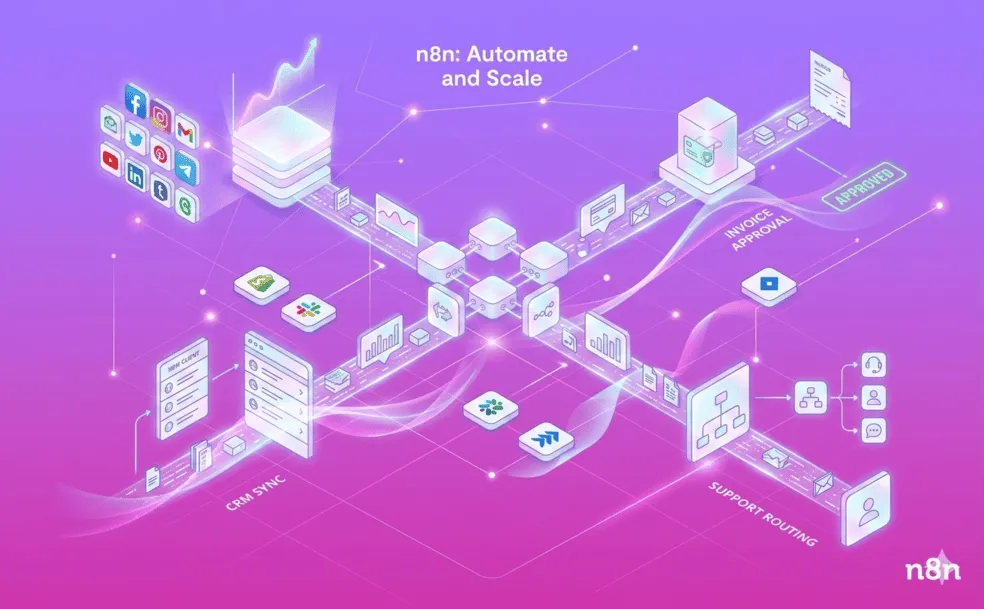
The rollout pattern that works: pick one process, automate it end-to-end, measure for a month, then expand. The metrics are concrete — response time, share of requests resolved without a human, conversion on assisted flows, hours returned to the team. If you want to test the waters before building custom, lightweight orchestration tools can automate simpler flows first — we compared the options in our guide to n8n business automation.
Timeline-wise, a scoped pilot is weeks, not quarters: process mapping and integration design in week one, a working assistant on real data by week three, and a measured verdict — with numbers, not impressions — within a month of starting. That cadence matters: automation initiatives die from long feedback loops more often than from bad technology.
From there, growth is incremental: new intents, new channels, new integrations — each addition landing on infrastructure that already works, instead of another isolated tool.
AI will not run your business — but it will absorb the routine that keeps your team from running it. If recruitment, retail communication, or support is where your bottleneck lives, explore our AI support solutions or write to us: we will identify the process where automation pays off first.