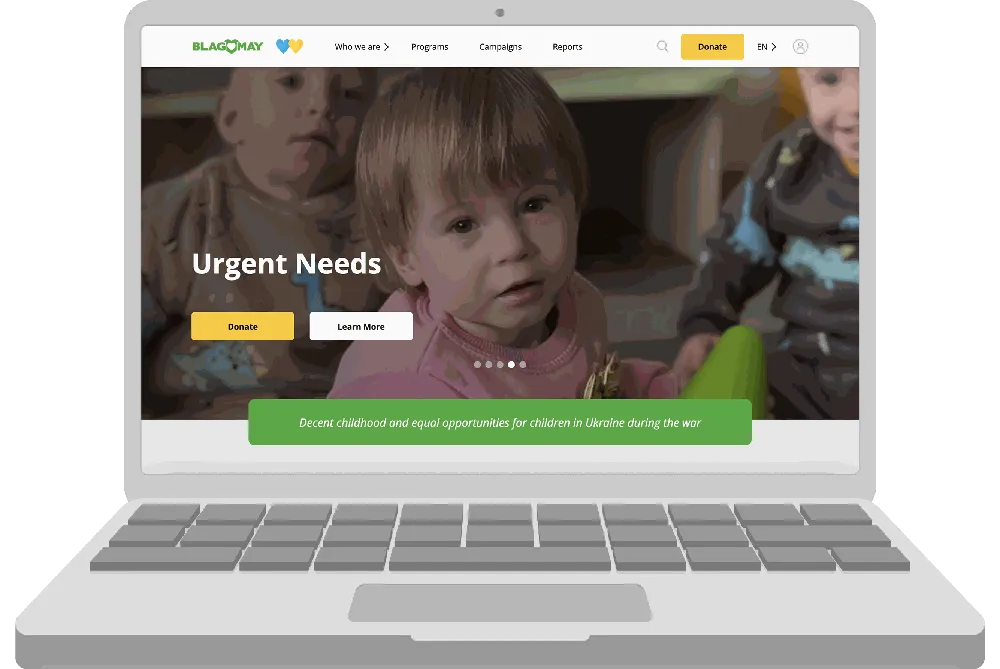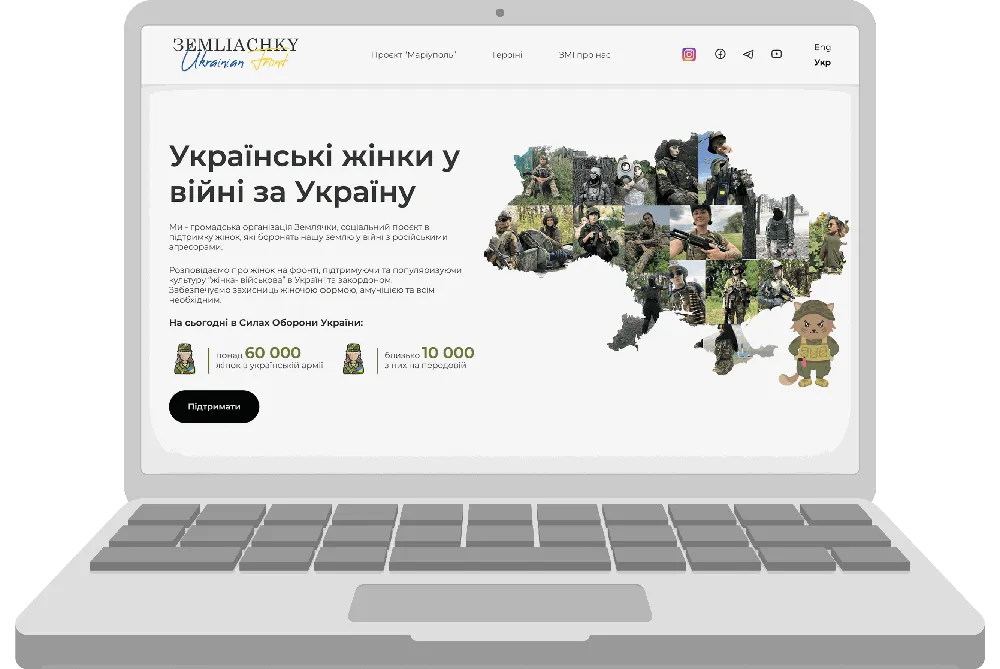
A foundation's website has four jobs: accept donations without friction, show supporters where the money went, and stay easy to update for whoever runs it this month. Cost depends on scope — a template one-pager and a custom donation platform are different projects — and digitalization grants in many countries cover part of either.
Planning a website for your foundation or NGO? Start with our website development services — our squads have shipped software since 2017, including donation platforms for charity foundations, and every quote here follows a discovery call, not a price list.
What a foundation's website must actually do
Strip away the design debates and an NGO website has four jobs; everything else is optional.
Take donations, one-time and recurring
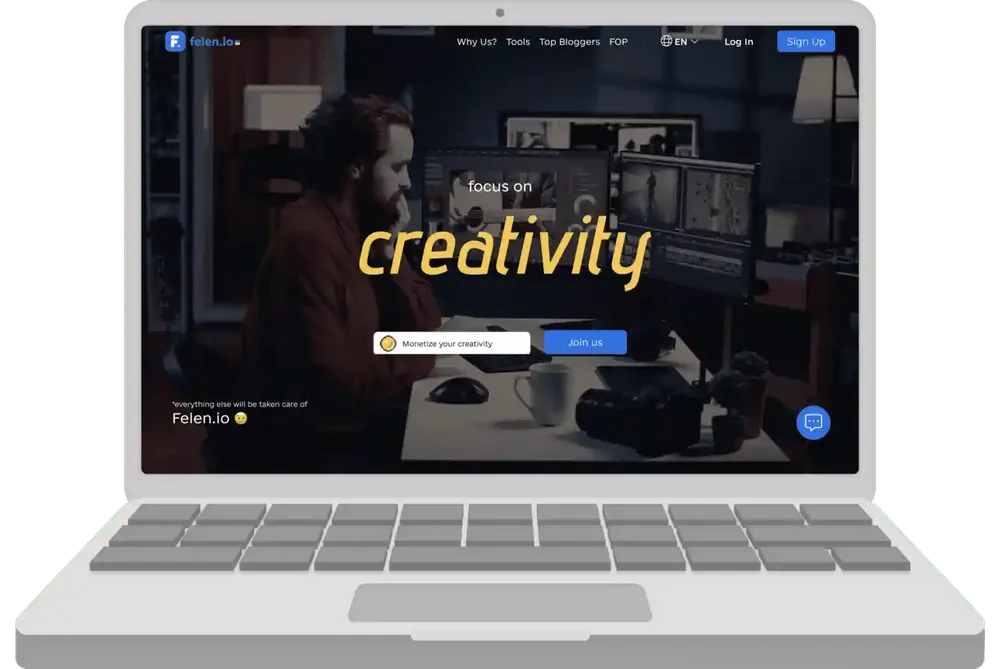
The donate flow is the site's revenue engine, and friction in it costs real money: a supporter who has to retype card details every month is one you eventually lose. The engineering substance is payment integration — providers such as Stripe, LiqPay, Monobank, or WayForPay — plus recurring giving where the provider supports it. On Felen, a content monetization platform we built, a custom payment aggregator routes fiat and crypto payments, handles recurring donations, and charges 0% fees on charity donations — more machinery than most foundations need, but proof that the donation rail is engineering, not decoration.
Prove where the money went
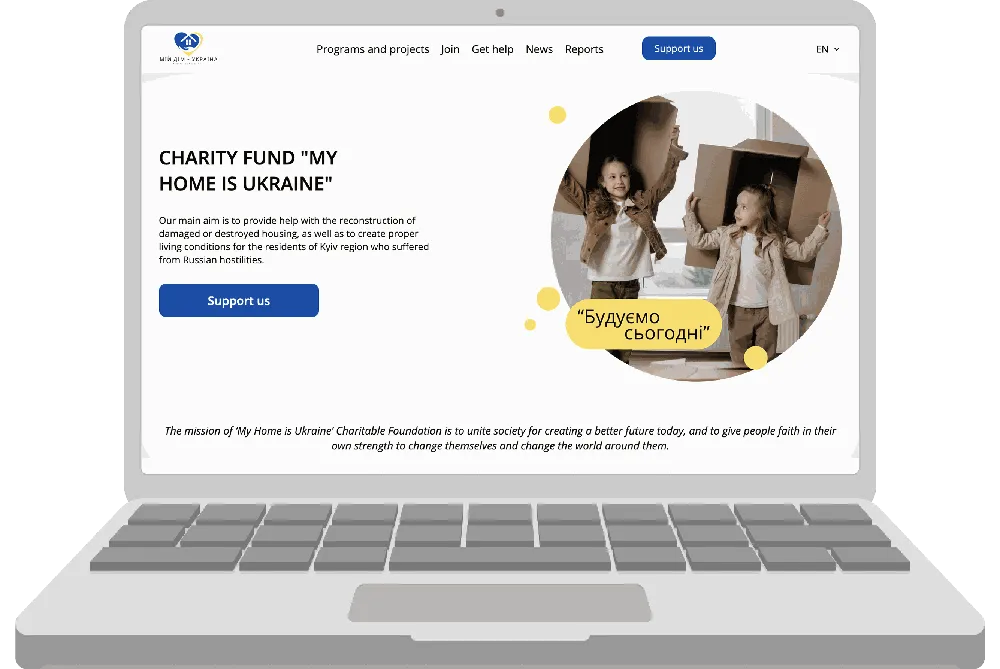
Donors give a second time to organizations that show what the first gift did. Transparency is a publishing habit — program pages, reports, photo and video updates that are easy to add — and the site either supports the habit or kills it. For the My Home – Ukraine foundation, which helps residents of the Kyiv region rebuild homes damaged by the war, we built a site that presents each program, takes donations, and publishes regular reports. It also serves the audience NGO websites most often forget: the affected families themselves, who use it to apply for assistance and follow the reconstruction work.
Be usable by everyone
A foundation's audience is wider than almost any commercial site's: elderly donors, people on old phones, people with disabilities — frequently the very people the mission serves. Accessibility, with WCAG as the reference standard, is concrete work: contrast, keyboard navigation, labeled forms, alt text. In a growing number of countries it is also a condition attached to public funding. Treat it as a work item with hours against it, not a checkbox.
Run on a CMS a volunteer can operate
NGO teams rotate. The person updating the site a year from now may be a volunteer who joined last month, and if publishing a report requires a developer, reports quietly stop being published — which kills the transparency section first. The admin panel has to be learnable in an afternoon, and handover has to include a training session. Staff turnover is not a risk in the nonprofit world; it is the operating condition, and we plan for it from the start.
Template or custom: the honest fork
Nearly every conversation with a foundation reaches the same question, and the answer is a fork, not a sales pitch. Here is how the two paths compare against the four jobs above:
| What the site must do | Template (site builder or theme) | Custom build |
|---|---|---|
| Present the mission, collect contacts | Fully covered — this is what builders are for | Covered, but overkill if this is all you need |
| One-time donations | Usually fine via an embedded widget or hosted checkout | Built into the site with any provider, full control over the flow |
| Recurring donations | Where builders stall — depends entirely on what a plugin or provider allows | Custom logic: recurring charges, receipts, currencies, fee routing |
| Programs and transparency reports | Works while the structure stays simple | Structured content types — volunteers fill in forms instead of rebuilding pages |
| Accessibility | Inherited from the theme — often poor, and fixes are limited | Built to standard from the start, and auditable |
| Multiple languages | Possible, but gets clunky as content grows | Native multilingual structure |
| Who maintains it | You, within the builder's limits | A volunteer-friendly admin panel, plus a support arrangement for the code |
| Cost profile | Low and flat: subscription plus theme, paid mostly in your own time | Higher upfront, in engineering hours; scales with scope, not with a plugin catalog |
Neither column is the "right" one — the fork is decided by which rows your foundation actually lives in.
What actually moves the cost
We are not going to print a price table: a number quoted without a conversation about scope is a guess. What we can give you is the factor list — what makes one foundation website several times the cost of another:
- Scope tier. Our NGO website projects range from donation-focused one-pagers to full platforms with programs, reports, media sections, and a merch store. That range is the single biggest cost variable.
- Donation engineering. How many payment providers, whether giving is recurring, how receipts and records work — the quiet complexity lives here.
- Content structure. How many programs, report types, and media formats the CMS must model so that non-developers can publish them.
- Languages. Each additional language multiplies content operations, not just translation.
- Accessibility depth. Meeting a standard is auditable work — hours, not a badge.
- Content readiness. Who writes the texts and supplies the photos. In our experience this, not development, is the most common launch delay.
- Support model. A small retainer, or fixes as needed. Decide before launch, not after the first outage.
Our quotes land as a fixed price for a defined scope or time & materials for an evolving product — itemized, for a reason explained in the next section.
What digitalization grants typically cover
Many countries run digitalization programs that nonprofits can use to fund a website — from governments and municipalities to international donors and private foundations. We are deliberately naming no programs and no amounts: they differ by country, and eligibility rules change often enough that any figure we printed would be wrong for your country within months. Check what operates where you are registered. What we can describe is the pattern — the costs such programs typically treat as eligible:
- The build itself. Design and development of a new site, or a redesign of an outdated one, is the most commonly funded item.
- Accessibility work. Increasingly funded as its own line item — audits and remediation, sometimes under dedicated accessibility programs.
- Maintenance and hosting. Sometimes eligible for a fixed period after launch; rarely open-ended, so plan the long-term support budget separately.
- Training. Some programs cover teaching your team to run the site — a natural pair with the volunteer-friendly CMS requirement above.
One habit saves NGOs real trouble: get the eligible-cost list before you scope, and ask every vendor for an itemized quote — discovery, design, development, accessibility, training, support as separate lines. A lump-sum quote is hard to fit into a grant application; an itemized one often drops straight in.
The process: from first call to a live site
- Discovery. One call and a one-page brief: mission, donation flows, reporting needs, and — critically — who will update the site after launch.
- Scope decision. The template-or-custom fork, made on the merits. If a grant is involved, the quote is structured to match its eligible-cost categories.
- Design and content structure. A trust-oriented layout with the donate action prominent, and the CMS modeled around your real programs. Start collecting texts and photos now — content is the usual bottleneck.
- Build in iterations. Working software every week or two, so you see the actual site grow instead of reading status reports — the model is documented on our how we work page.
- Payments end-to-end. Donation flows tested with real small transactions: success paths, failure paths, receipts, and recurring charges.
- Accessibility pass. Checked before launch, while fixes are cheap — not discovered after a funder asks.
- Handover and training. A working session until publishing a report feels routine, not risky.
- Support. An agreed arrangement for fixes and updates, because the site will outlive any single volunteer's tenure.
When a simple template genuinely is the right answer
If your foundation needs to present its mission, list contacts, and take one-time donations through a hosted donation service — in one language, with no complex reporting — then a site builder is the right tool, and an agency proposing a custom build for that scope is scoping for its own invoice. Donor money should go to the mission, not to engineering the organization does not need.
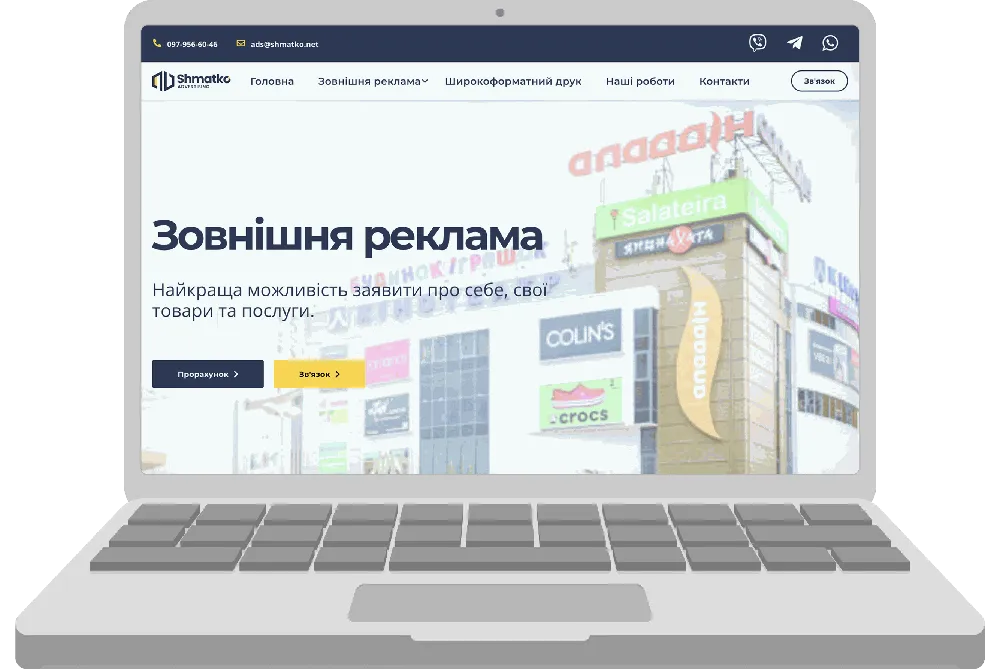
The same rule applies inside custom work. Not every project we take is a platform: for Shmatko, an advertising production company, the whole job was a responsive site with service descriptions, a portfolio of completed work, and contact forms — that was what the business needed, so that is what was built. A small foundation deserves the same discipline.
The moment to go custom is when the template starts fighting you: recurring giving you cannot control, reports that require rebuilding pages by hand, a second language, or integrations the builder will not allow. Rebuilding a stalled template into a platform later almost always costs more than a frank scoping call at the start.
Frequently asked questions
How much does a website for a foundation cost?
There is no honest single number. A donation-focused one-pager and a multi-program platform with recurring giving, reports, and multiple languages are different projects with costs apart by an order of magnitude. The factor list above is what moves the number; a discovery call is what pins it down.
Can our volunteers really run the site themselves?
Yes, if that requirement shapes the build from day one: a CMS chosen for non-technical users, content structured as forms rather than freeform pages, and a training session at handover. It fails only when "easy to update" is assumed instead of designed.
Do we need recurring donations from day one?
Not always, but decide deliberately, because recurring giving is exactly where template builders stall. If monthly supporters are part of your funding model, make recurring flows part of the initial scope — the payment logic, receipts, and records are the deep part of the build.
Will a digitalization grant cover the whole project?
Often the build, sometimes accessibility and training, rarely open-ended maintenance. Programs differ by country and change year to year, so start from your program's eligible-cost list and get an itemized quote that maps onto it — any gap is visible before you commit.
Is accessibility legally required for NGO websites?
It depends on your country and your funding: publicly funded organizations face formal requirements in a growing number of jurisdictions. Treat it as baseline quality either way — your audience includes exactly the people accessibility standards exist for, and retrofitting costs more than building it in.
If your foundation is planning a website — or replacing one nobody on the team can update — our websites for nonprofits & NGOs service starts the way every project here does: one discovery call, a short brief, and a scope you can take straight into a grant application.