Published industry cost guides put a custom rule-based chatbot at roughly $10,000–30,000, a moderately complex AI chatbot at $75,000–150,000, and an advanced generative-AI system at $150,000–500,000, with each deep integration adding 20–50%. What sets the price inside those ranges is the job you give the bot: platform count, integration depth, and whether a language model is involved at all.
I price these projects myself, and most budget conversations start with a number someone found in one of those guides. Below I explain where the market figures come from, which of them apply to your situation, and what actually moves a quote up or down. If you want a number for your project rather than a market range, our AI chatbot development squad scopes it from one discovery call and a short brief.
What the market charges in 2026
Several vendor cost guides publish chatbot pricing every year, and in 2026 they agree more than they used to. Aggregating the ranges from the industry analyses that rank for this question gives a reasonably consistent picture:
| Project type | Market range (2026) | What the money buys |
|---|---|---|
| Rule-based chatbot | ~$10,000–30,000 | Scripted menus, buttons, and logic branches on one platform; no AI |
| Moderately complex AI chatbot | $75,000–150,000 | A language model answering questions on your data, with testing, guardrails, and an admin panel |
| Advanced generative-AI system | $150,000–500,000 | Multi-channel assistants with deep business logic, analytics, and serious load |
| Integrations (CRM, ERP, POS, payments) | +20–50% of project cost, roughly $5,000–25,000 per API | The bot reading and writing real business data instead of answering in a vacuum |
Three things are worth knowing about these numbers. First, they are market ranges from published industry analyses, not our price list — rates differ a lot by geography, and the guides skew toward US agency rates. Second, notice the gap: the guides jump from $30,000 straight to $75,000. In practice, a large share of real business projects live inside that gap — bots that use AI for one narrow, well-defined job without becoming a research program. Third, the step between bands is not “more code.” It is the AI line: once a language model answers customers in your name, you are paying for data preparation, evaluation, safety rails, and ongoing model usage — not only for flows.
The four bands a chatbot project falls into
We have been shipping software since 2017, and chatbots for most of that time — for retail chains, transport companies, car dealer networks, cafés, and fitness creators. The useful question is not “how much does a chatbot cost” but “which of four projects am I buying.” Cheapest first:
1. Builder-based launch
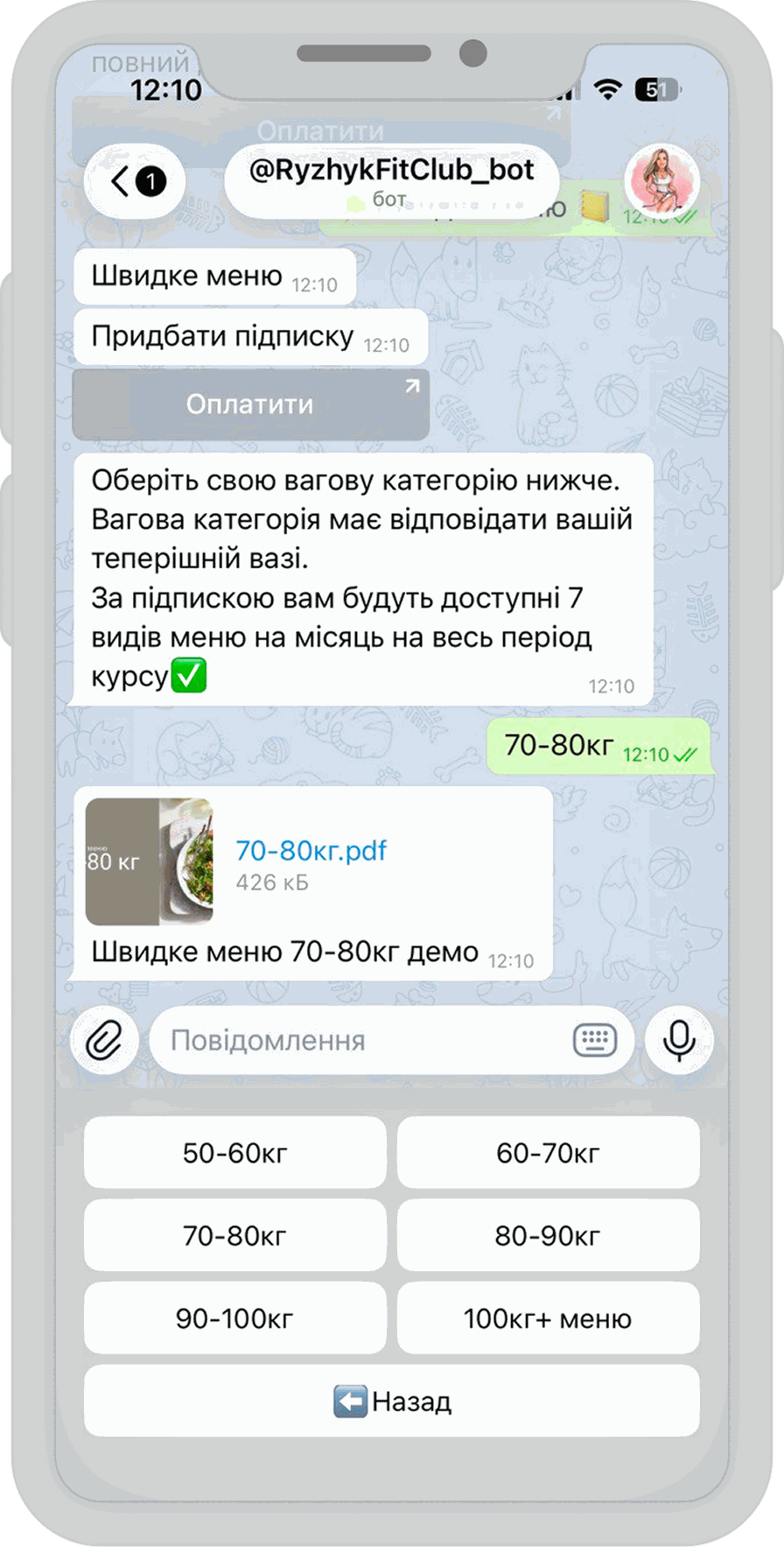
When fast launch matters more than custom architecture, adapting an existing chatbot builder beats coding from scratch. We take this route on our proprietary builder: RyzhykFitClub runs on it — paid subscriptions, personalized nutrition plans, payments, and a gamified retention loop, without a from-scratch build. This is the cheapest band because most of the engineering already exists; you pay for configuration, branding, and the parts that are genuinely yours.
2. Custom scripted bot
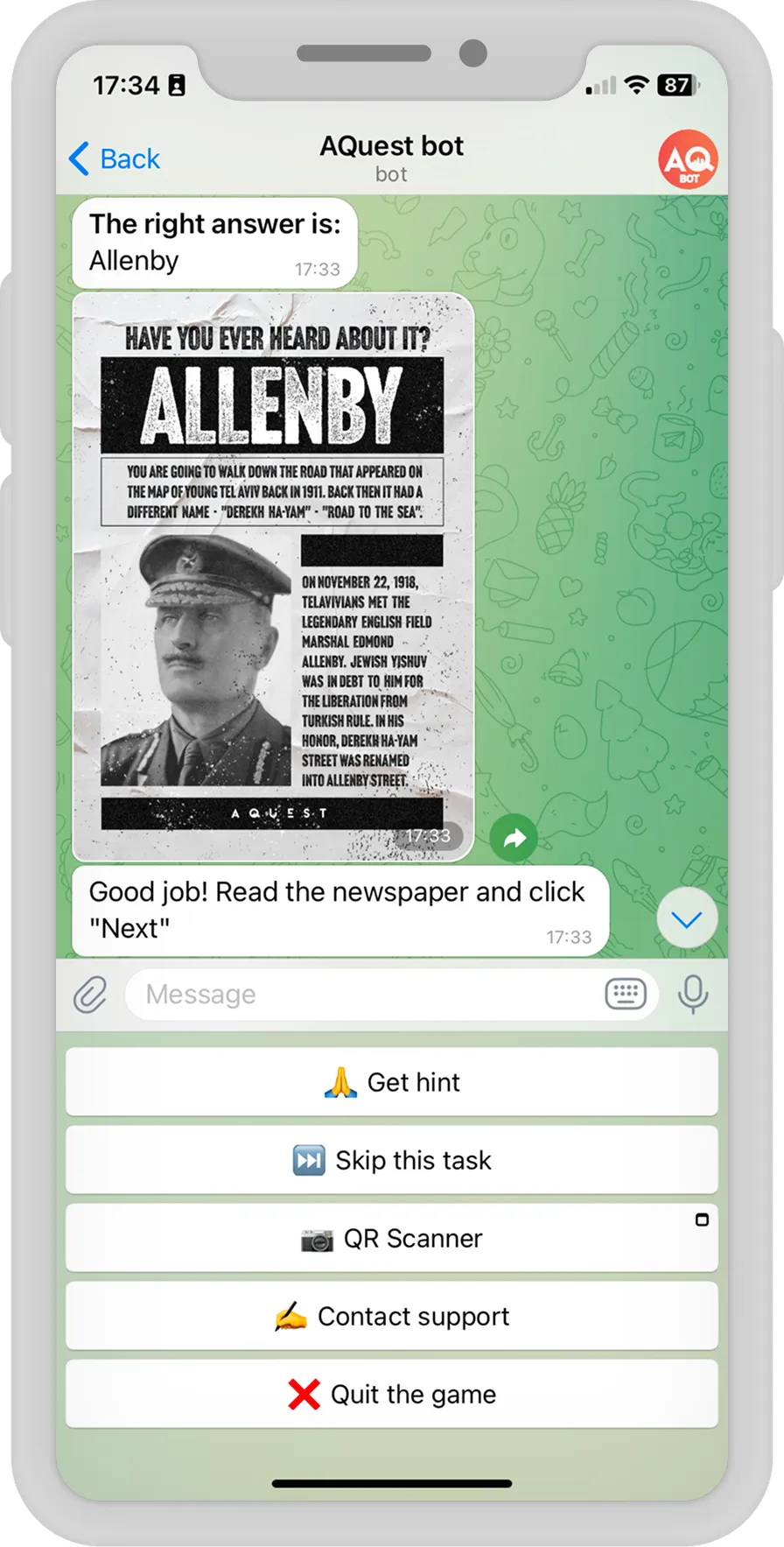
No language model anywhere: the bot leads users through menus, button flows, and payments on a single platform, and every conversation path can be tested before launch — which is also why the running costs never surprise you. That determinism is exactly why scripted bots are underrated: AQuest, a paid city-quest bot we built for the Israeli market, has been in production for more than six years. Scripted logic also carries entire event operations — schedules, notifications, interactive contests — which we covered separately in our article on event chatbots. If your process is fixed and your answers do not vary, this band is usually the right one.
3. AI assistant on your data
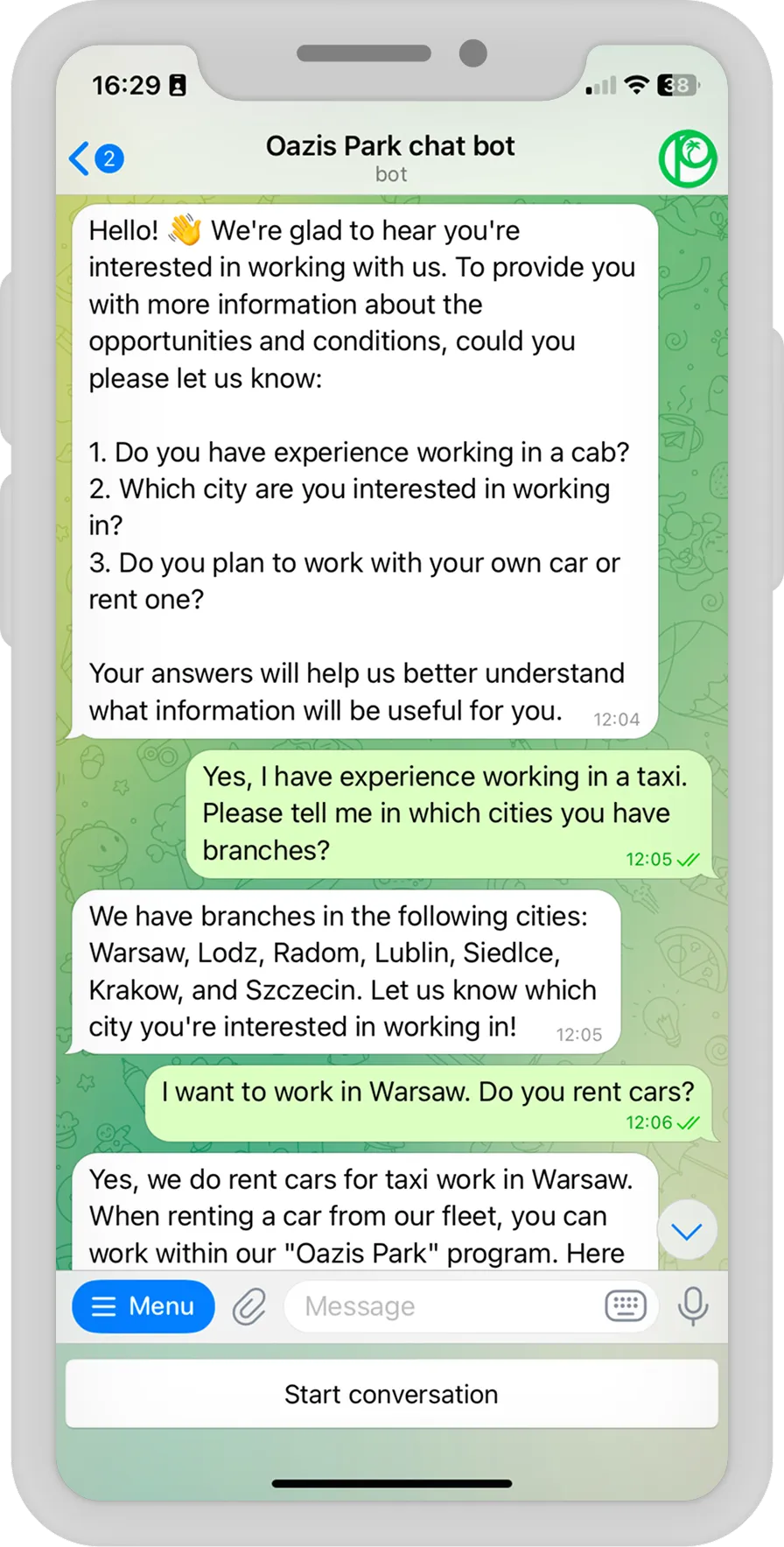
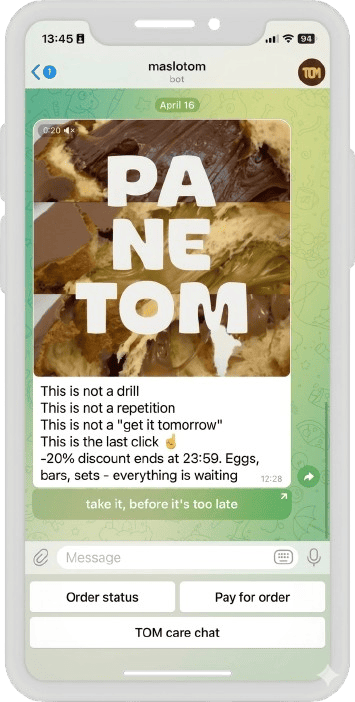
Here a language model answers customers from your own documentation, catalog, and order data — retrieval-augmented generation, in industry terms — escalates to a human whenever confidence drops, and ships with an admin panel so your team edits content without filing a developer ticket. This is the band the market guides label “moderately complex AI.” For Maslotom, an assistant in this band answers product questions and manages orders around the clock — it cut manual support workload by 80%. For Oazis Park, a major Polish transport company, the same pattern automates driver recruitment 24/7 and hands uncertain cases to a human. Where AI pays off first — and where it does not — is a question we examined in detail in our article on AI automation in recruitment, retail, and support.
4. Multi-platform product
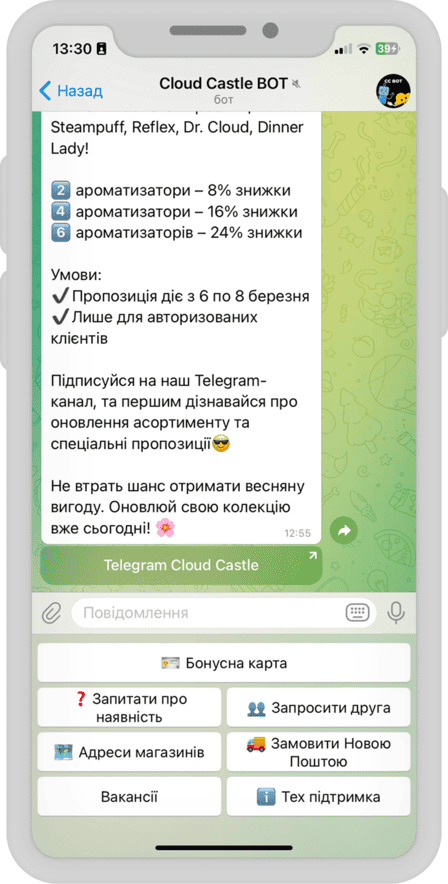
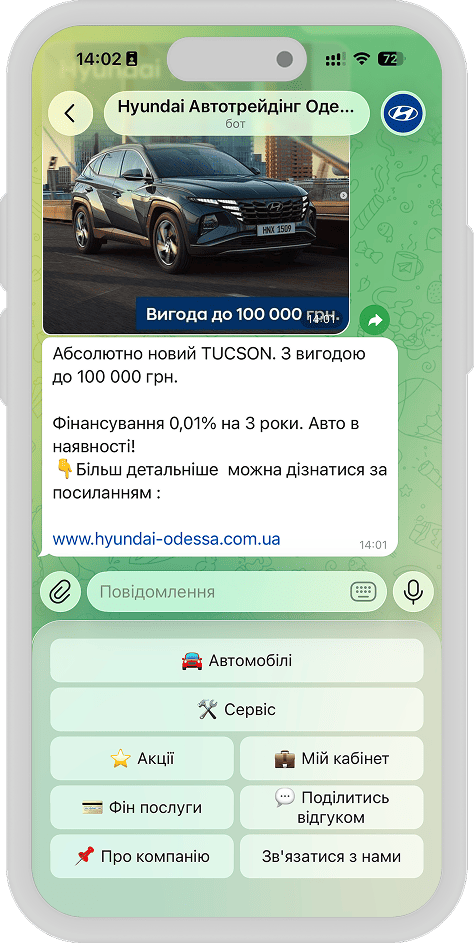
At this level chat is only the interface to a full piece of software: customers log in, browse a live catalog, collect loyalty points, and pay, while the back end exchanges data with POS, ERP, and CRM systems and feeds an analytics layer. Our chatbot for a premium vaping retailer sits here: 7,000 products across 59 stores, 50,000+ customers, and more than $5 million in revenue generated through the chatbot channel. So does our chatbot platform for automotive dealer networks, where Hyundai, Skoda, and Suzuki dealers run sales, service booking, and test drives in chat. Budgets in this band are driven by integrations and scale, and the top of the market ranges applies.
We deliberately do not publish a fixed price list: putting one number on four different kinds of project misleads more than it helps. What we can do is tell you which band your task belongs to — in one call — and say straight out when scripted logic will do the job. AI you do not need is cost you do not need.
Seven factors that actually move the price
Whatever the band, the same factors push a quote up or down. When I scope a project, these are the questions behind the number:
- Number of platforms. Telegram only is one project; Telegram plus WhatsApp plus a web widget is closer to three. Each platform brings its own APIs, limits, and review rules.
- AI versus scripted logic. A language model adds data preparation, retrieval engineering, evaluation, and a per-conversation running cost. If the answers never vary, you are paying for flexibility you will not use.
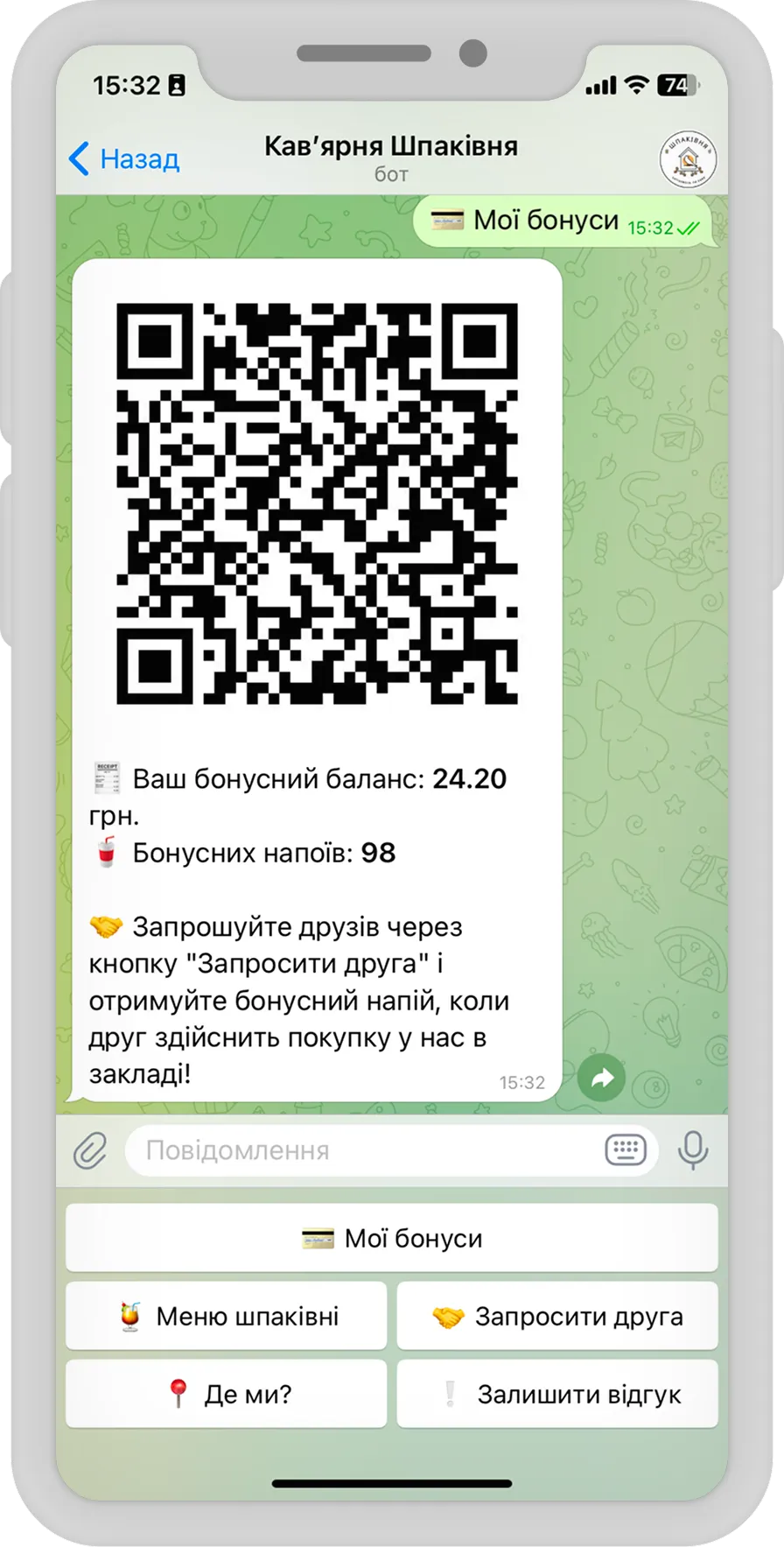
- Depth of integrations. A bot that reads your product catalog is cheaper than one that writes orders into your ERP and syncs loyalty points with your POS. The market guides’ +20–50% for integrations matches what we see in practice: in our loyalty system for cafés, the POS and CRM synchronization was serious engineering in its own right.
- Admin tooling. Who changes the bot’s content next month? If the answer is “a developer,” every text edit becomes an invoice. An admin panel costs more up front and less every month after.
- Load and reliability. A bot for 200 users and a bot for 50,000 customers are different engineering. Queues, rate limits, monitoring, and failover appear in the second one.
- Data and compliance. Where customer data lives, what the model is allowed to see, GDPR constraints — regulated industries add review cycles and infrastructure decisions.
- Payments and monetization. Subscriptions, one-time payments, refunds, receipts — each adds providers, edge cases, and testing that a notification bot never needs.
What a chatbot costs after launch
Build cost is only the first number; the second one is monthly, and it depends on the same AI line. A scripted bot runs on hosting and platform fees, which for most businesses is a minor operating line — AQuest has run in production for over six years on exactly this model. An AI bot adds model usage that scales with conversation volume, plus regular work on the knowledge base: products change, policies change, and an assistant answering from last year’s data is worse than no assistant. Budget content upkeep as an operating cost, not a one-time task.
When you compare quotes, ask every vendor for the monthly number, not just the build number. A low build price with an expensive dependency behind it is a common pattern in this market.
How to pay less without buying a cheap bot
There is a real difference between reducing scope and cutting corners. Four ways to spend less that we actually recommend:
- Start on one platform. Launch where your customers already are, prove the numbers, then expand. Multi-platform can be phase two.
- Script what is fixed, apply AI where answers vary. Menus for ordering, AI for open questions. Hybrid bots are often the best cost-to-value ratio in the whole market.
- Launch on a builder, customize later. If the business model is unproven, a builder-based launch answers the market question for a fraction of a custom build — and nothing stops you from going custom once the numbers say so.
- Prepare your content before development starts. For an AI assistant on your data, half the project is your knowledge base. Clean, current documentation directly shortens the engineering.
What we do not recommend is the bargain template bot with no human handoff, no admin panel, and no analytics. It survives the demo script and fails the first real customer — and the rebuild costs more than building it properly once. 3 out of 4 of our clients return with their next project; nobody returns to rebuild the same bot twice.
Frequently asked questions
Does every chatbot need AI?
No. If your process is fixed — ordering, booking, an FAQ with stable answers — a scripted bot is cheaper to build, cheaper to run, and easier to test. AI earns its cost when questions genuinely vary or when the answers live in a large, changing knowledge base. If scripted logic covers your task, we will say so in the first call.
What does it cost to run a chatbot each month?
A scripted bot needs hosting and platform fees — usually a minor operating line. An AI bot adds model usage that scales with conversation volume, plus content upkeep for the knowledge base it answers from. Exact monthly figures depend on your traffic, which is why a serious vendor quotes running costs next to the build cost instead of hiding them.
How long does a chatbot project take?
Timelines track the same bands as budgets: a builder-based launch is the fastest path, while a multi-platform product with ERP integrations is a multi-month build at any agency. We deliver iteratively — working software every week or two — so you use early versions instead of waiting for a final reveal. In our experience the honest schedule driver is decision speed and content readiness on the client side, not coding speed.
What makes a chatbot project expensive?
Integrations, platforms, and load — in that order. The word “AI” by itself is not what makes a project expensive; a language model answering from a clean knowledge base is a well-understood build in 2026. Deep write access into ERP, CRM, and POS systems, several messaging platforms at once, and tens of thousands of users are what push projects toward the six-figure end of the market ranges.
What are the risks of a cheap chatbot?
Dead-end conversations with no human handoff, content only a developer can change, no analytics, and integrations that turn out to be manual copy-paste behind the scenes. The visible risk is a customer-facing failure; the hidden cost is the rebuild. If the budget is tight, reduce scope — one platform, scripted logic — rather than quality. A small bot that works beats a big bot that almost works.
How can I reduce the cost of a custom chatbot?
Start on one platform, script the fixed flows, apply AI only where answers genuinely vary, and prepare your knowledge base before development starts. If the business model itself is unproven, launch on a builder first. Every one of these levers reduces scope, not quality — which is the only honest way to lower the price.
Do chatbots actually pay for themselves?
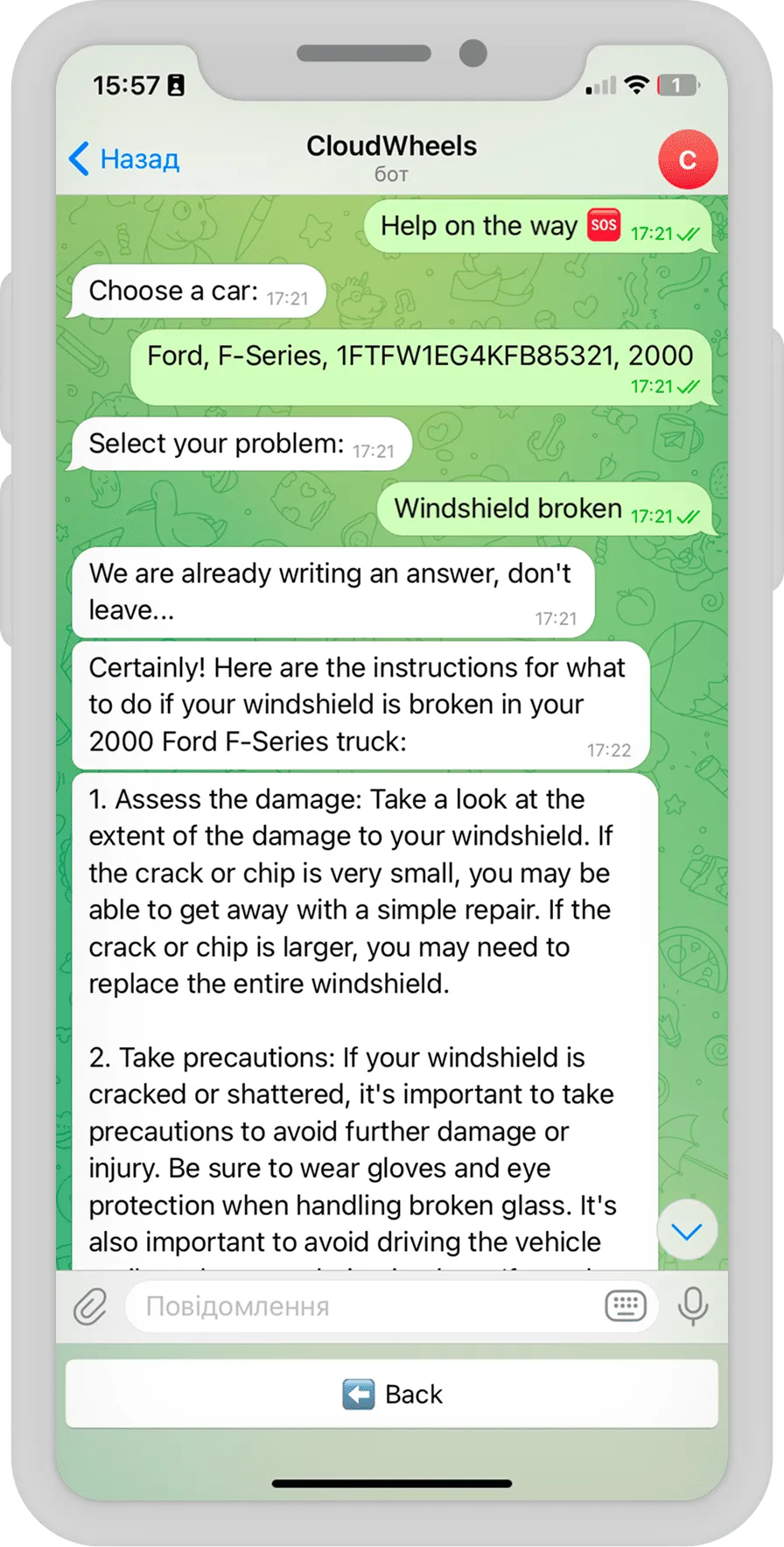
The published numbers from our own cases: more than $5 million in revenue through one retail chatbot channel, an 80% cut in manual support workload at Maslotom, and x4 upsell growth after adding an AI assistant to CloudWheels’ auto-service CRM. None of these are guarantees — they are what happened when the bot matched the business process. That match is what you are paying for.
Where to go from here
We have built software this way since we started in 2017, for clients across eight countries — and three of every four come back with a next project. A chatbot project here is a squad, not a vendor: three developers and a product manager as a single point of contact, with direct access to the engineers. To find out which band your project falls into and what that means for the budget, start at our AI chatbot development services page, or go straight to custom chatbot development; for support automation specifically, see customer support chatbots. Discovery is one call and a short brief — and the first thing we will tell you is whether you need AI at all.