Industry analyses of the Polish market put AI chatbot implementation between 2,000 and 45,000+ PLN, with a typical project around 18,000 PLN — roughly €4,200 or $4,600 — plus 300–2,500 PLN per month to keep it running. Where a specific project lands inside that range depends on a handful of factors we break down below.
Planning a chatbot for your business? Start with our chatbot development services — our squads have shipped software since our founding in 2017, including bots for a major Polish transport company, retail chains, and e-commerce brands.
One thing this article is not: a global cost guide. If you want a type-by-type breakdown of what chatbots cost worldwide — rule-based versus generative AI, what integrations add, build versus buy — read our guide How Much Does a Custom AI Chatbot Cost in 2026?. This piece covers the Polish market specifically: what local agencies charge, why the numbers differ from Western quotes, and when hiring in the region makes sense.
What Polish agencies charge in 2026
Polish software houses rarely publish a fixed price list for chatbots, but enough of them publish ranges that the market picture is reasonably consistent. Aggregated, it looks like this:
| Cost item | Polish market range (PLN) | Approx. EUR | Approx. USD |
|---|---|---|---|
| Implementation — full market spread | 2,000 – 45,000+ PLN | ~€450 – 10,500 | ~$500 – 11,500 |
| Typical mid-market project | ~18,000 PLN | ~€4,200 | ~$4,600 |
| Ongoing monthly cost (hosting, model usage, maintenance) | 300 – 2,500 PLN / month | ~€70 – 580 | ~$75 – 640 |
Two notes on that table. First, the EUR and USD columns are rough conversions at the time of writing, for orientation only — check current rates before you budget. Second, these are market ranges drawn from published Polish agency pricing, not our price list; how we quote is covered further down.
The spread itself tells you most of what you need to know. 2,000 PLN buys a template flow assembled on a SaaS bot builder — a menu, a few buttons, a contact form in chat. 45,000+ PLN is a custom AI assistant with its own knowledge base, integrated with a CRM or ERP, tested and monitored in production. Those are different products that happen to share a name.
Why Polish rates sit below Western quotes
US-market cost guides put a moderately complex AI chatbot at $75,000–150,000 — the full breakdown is in the global guide. Polish market analyses put a typical project around 18,000 PLN, which is under $5,000. Part of that gap is project class — the typical Polish project is a leaner build than the US guides' "moderately complex" band. But most of it is rates, and the rate gap is not a quality gap. Three things explain it:
- Engineering hours cost less. The bulk of any chatbot budget is developer and project-manager time. Salaries in Poland and the wider CEE region are a fraction of US coastal rates, and that difference flows directly into quotes.
- The talent pool is deep. Central and Eastern Europe has been building software for Western clients for two decades. The stacks are the same, the AI models are the same, and competition between software houses keeps margins honest.
- Overhead is lower. A small senior team in Warsaw or Kyiv does not carry an enterprise sales apparatus. You pay for the people who build the product, not for the people who sold it to you.
What does not get cheaper: the AI itself. Model usage is priced in dollars per token whether the calling code was written in Kraków or San Francisco, and the same goes for most third-party licenses. That is why monthly running costs sit proportionally closer to Western figures than implementation does. The regional saving is on engineering hours — which is where most of the money goes anyway.
Why quotes inside the 2,000–45,000 PLN spread differ
Most of what moves a chatbot quote is global, not Polish: scripted logic versus a language model, how many systems the bot reads and writes, how many channels it ships on — a single-channel bot for event logistics and interaction is a smaller project than the same logic on three platforms. The factor-by-factor breakdown lives in the global cost guide and applies in Warsaw exactly as it does in Boston; and when the workflow extends well beyond chat, you are budgeting business process automation, a different scope with its own numbers. Three factors, though, read differently through a Polish lens:
- The language the bot must actually work in. A bot for the Polish market answers in Polish — declensions, typos, and the way real customers phrase questions included. Building that is not much harder than building in English anymore; testing it properly is where the work sits, because the bot has to be evaluated against live Polish conversations, not an English demo script. Ask any vendor how they test in Polish — the answer sorts serious quotes from optimistic ones.
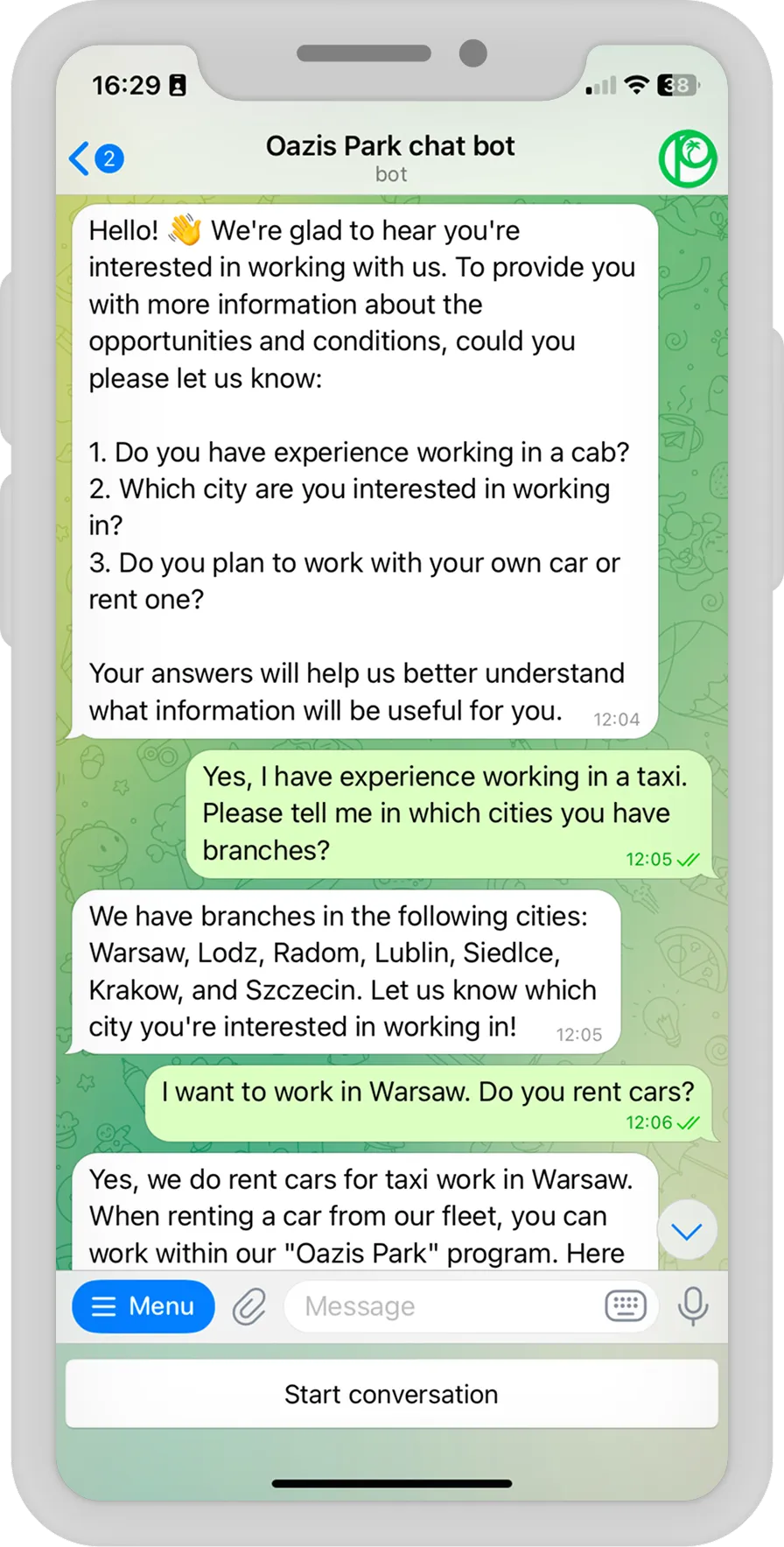
- Knowledge-base scope and handoff logic. How much material must the bot answer from, and what happens when it is not sure? For Oazis Park, a large transport operator in Poland, we built a recruitment chatbot that answers driver candidates 24/7 and hands the conversation to a human when it is uncertain. Designing the knowledge base and the handoff rules was the substance of the project — not the chat window — and that design work is most of the distance between the middle and the top of the PLN range.
- Who builds it. Polish quotes come from three kinds of vendors, and the spread partly maps onto them. A freelancer is cheapest and can be the right call for a simple flow bot — the trade-off is continuity when they move on. A local software house costs more per hour and gives you process. A nearshore squad is the third option — ours is three developers and a product manager, shipping working software every week or two at regional rates.
Where does Momentum sit in these bands? We do not publish a price list, because scope decides everything — but our band logic mirrors the market's. A flow-based bot with a single integration sits at the low end of the effort scale. An AI assistant with a custom knowledge base, human handoff, and CRM integration — like the Oazis Park recruitment bot — is a mid-to-upper-band project. Every quote follows a discovery call and a short brief, and lands as a fixed price for defined scope or time & materials for an evolving product.
When hiring in Poland or the wider region makes sense
Polish rates raise an obvious question for companies outside Poland: can you hire at regional rates without working blind across ten time zones? For European companies, the answer is that this region is nearshore, not offshore. Our engineering is rooted in Kyiv — the same or an adjacent time zone as Warsaw, Vienna, and Madrid — so communication happens in real time through the whole workday, not in overnight ticket exchanges. For North American clients, our afternoon overlaps the East Coast morning, so daily standups happen live, not by recording.
Language is the other half of the nearshore case. This site runs natively in English, Ukrainian, and Polish. On a project you get a single point of contact — a product manager — with direct access to the engineers behind them. How we run projects — discovery first, iterative delivery, a squad rather than a vendor — is documented on our how we work page.
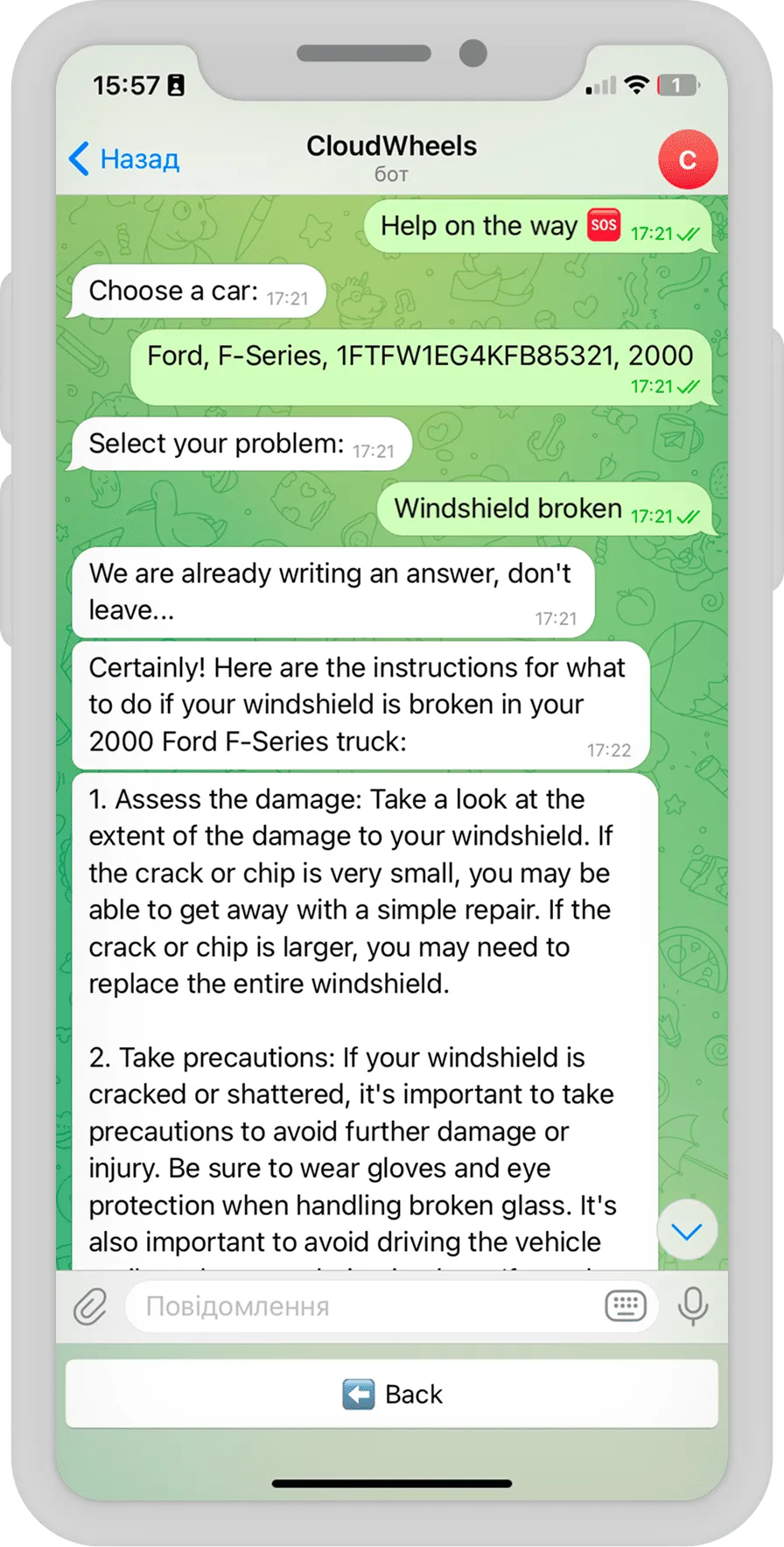
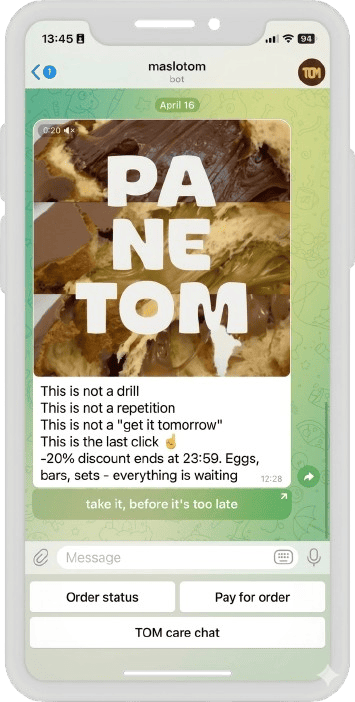
Our squads have worked across eight countries since 2017 — Poland among the first of them — and three out of four clients return with a next project. For Polish companies specifically, the Oazis Park recruitment bot is the relevant proof: a production AI system built for a Polish enterprise, running 24/7. The same squad's other bots show the range of the work: at Maslotom, AI now handles 80% of incoming requests automatically; at CloudWheels, the assistant works inside an auto-service CRM and sends automated maintenance reminders. Where AI automation pays off first — recruiting, retail, support — is a question we have answered across markets, not just one.
How to compare quotes
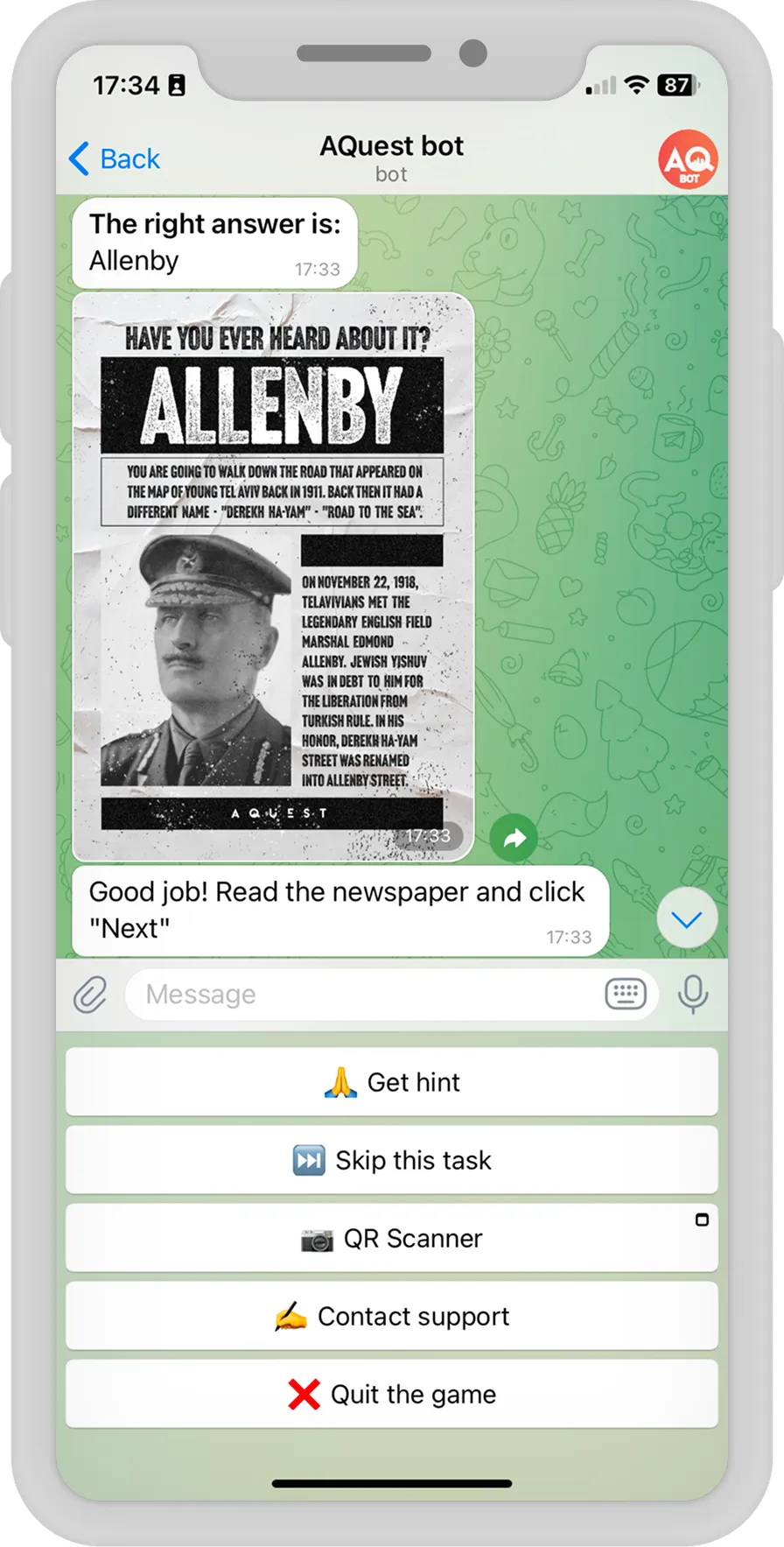
When you have two or three offers on the table, price alone will mislead you. Ask each vendor the same four questions: what exactly does the monthly fee cover; who owns the code and the knowledge base; what happens when the bot is uncertain; and can they show a bot that has run in production for more than a year. That last one filters marketing from engineering — our AQuest city-quest bot has been in production for over 6 years, and longevity is a fair thing to demand from anyone.
Frequently asked questions
Why are chatbot prices in Poland lower than in the US or Western Europe?
Because the largest cost component — engineering and project-management hours — is priced at regional salary levels, while the output is the same stacks and the same AI models. Market analyses put a typical Polish project around 18,000 PLN — even after adjusting for project scope, the rate gap against comparable US quotes is wide.
Is a 2,000–5,000 PLN chatbot worth buying?
Sometimes. For a narrow, well-defined flow — answering five standard questions, collecting a contact — a template bot on a SaaS builder does the job. The wall comes later: integrations, custom logic, and AI answers are where templates stall, and rebuilding costs more than getting the scope right at the start. If your bot needs to talk to your CRM, budget above that band from day one.
What do the 300–2,500 PLN monthly fees usually cover?
Hosting, model usage (billed in dollars by the AI providers, which is why this line item does not shrink much regionally), monitoring, and small fixes. Ask for the breakdown in writing — the spread between 300 and 2,500 PLN mostly reflects how much AI traffic the bot handles and how actively it is maintained.
Do I need to be in Poland to hire at these rates?
No. Regional rates come from where the engineering sits, not where the client sits. EU companies get same-timezone collaboration; North American companies get a live morning overlap. The practical questions are communication and process, and those you can test in a single discovery call.
How does Momentum Squads price a chatbot project?
We do not quote before understanding the process the bot must serve — anyone who does is guessing. Discovery comes first: one call and a page of context, then a concrete estimate as a fixed price for defined scope or time & materials for an evolving product. The market ranges above are a sanity check; your scope sets the number.
If you are budgeting a chatbot for 2026, the ranges in this article will tell you when a quote is padded — and if you want a number for your specific case rather than a market average, our chatbot development team starts with a discovery call, not a price list.