AI agents in retail and e-commerce have twelve proven jobs: product discovery, in-chat ordering and payments, point-of-sale in chat, cart recovery, order tracking, support automation, loyalty programs, referrals, in-store price scanning, promotional broadcasts, purchase-stage booking, and hiring. One of our retail bots alone has generated over $5 million from 50,000+ customers.
This is not a trend piece — these use cases come from systems we run for real retailers, chains, café networks, and dealer groups; nine of the twelve carry a named case and real figures, the rest are capabilities of the same builds. I have ordered them roughly along the customer journey: finding a product, paying, coming back. If you want to skip straight to what this looks like for your store, start at our AI retail bots service page, or at the broader AI chatbot development pillar.
The 12 use cases at a glance
| Use case | Channel | Named proof |
|---|---|---|
| 1. Product discovery & guided search | Telegram, WhatsApp, Viber, Instagram, site widget | Premium vaping retailer — 7,000 products in chat |
| 2. In-chat ordering & payments | Telegram | Same retailer — $5M+ via the chatbot channel |
| 3. Chat as a point of sale | Mobile chat + smartphone tap-to-pay | Online Casa — fiscal receipts in chat |
| 4. Cart & checkout recovery | Messenger follow-up | — (service capability) |
| 5. Order tracking & post-purchase updates | Any messenger | — (service capability) |
| 6. Support automation with human handoff | All channels | — (service capability) |
| 7. Loyalty: digital card, QR, cashback | Chat + POS sync | Nasha Rukavychka; café loyalty system (Poster POS) |
| 8. Referral programs | Personal links in chat | Nasha Rukavychka; café loyalty system |
| 9. In-store self-service: price scanner, store finder | Customer's phone in the aisle | Nasha Rukavychka barcode scanner; 59-store locator |
| 10. Promotions & targeted broadcasts | Messenger | Nasha Rukavychka; vaping retailer |
| 11. Bookings, test drives & financing | Chat + dealer ERP/CRM | Dealer platform — Hyundai, Škoda, Suzuki |
| 12. Hiring through the same bot | Same bot, jobs section | Vaping retailer; Nasha Rukavychka |
The 12 use cases in detail
-
Product discovery and guided search in chat
A discovery bot asks clarifying questions, searches your catalog, compares options, and suggests an in-stock alternative when the item a customer wants is gone. Because it reads the same product feed your site does, price and stock are never stale. Our chatbot for a premium vaping retailer does this at real scale: 7,000 products across 59 stores, browsable by category in Telegram, with detailed catalogs a few taps deep.
The buying trigger: your range has outgrown mobile browsing, and “do you have X in stock” is one of your most common support questions.
-
In-chat ordering and payments
Once a customer has found the product, the same conversation takes the order and the payment — no redirect to a website checkout that sheds buyers on mobile. That retail bot above is the anchor here too: more than $5 million in revenue has gone through the chatbot channel, from 50,000+ customers, which makes the bot the retailer’s central sales tool rather than a gimmick next to one.
The buying trigger: customers already write to you in messengers to ask and order, and your team confirms every order by hand.
-
Chat as a point of sale: payments, fiscal receipts, reporting
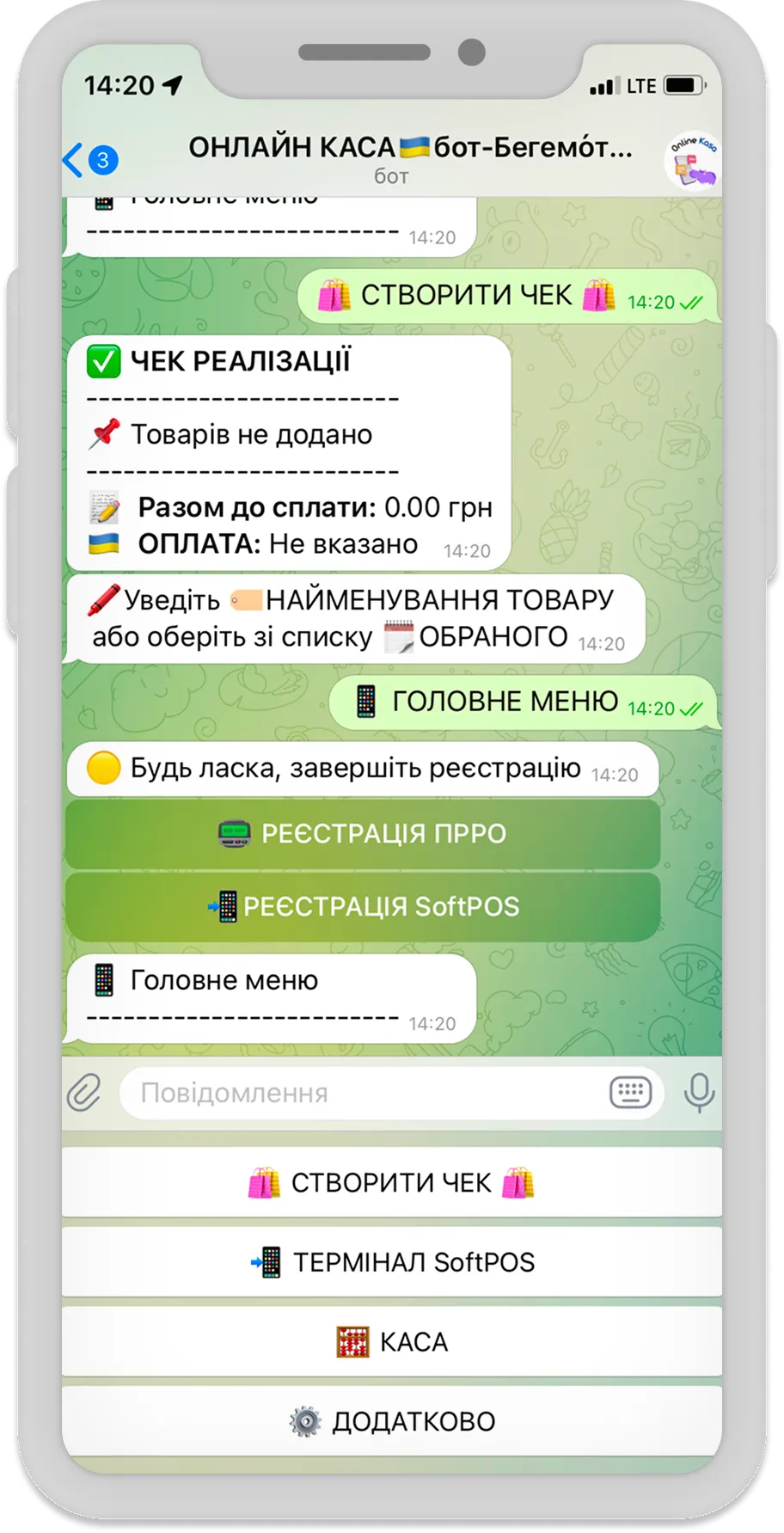
For small and mid-size retail, chat can replace the cash register. Online Casa, a chatbot product we built, lets a merchant sell goods, issue fiscal receipts through an integrated software cash register, accept payment by tapping a bank card on a smartphone, and keep tax reporting in order — for individual entrepreneurs and companies alike.
The buying trigger: you open points of sale faster than you want to buy and maintain POS hardware, or you need fiscal compliance without extra headcount.
-
Cart and checkout recovery
A customer loads a cart, hesitates, and leaves — and in a messenger, unlike email, the follow-up actually lands: a nudge, the answer to whatever stalled them, or an offer with a clock on it. In our builds this is consistently one of the fastest automations to pay for itself, because the margin on a recovered order is the whole order.
The buying trigger: you pay for traffic, watch a large share of carts abandon, and your only recovery channel today is an email nobody opens.
-
Order tracking and post-purchase updates
Everything a buyer would otherwise open a ticket to ask — did the payment go through, where is my parcel, when do I pick it up — arrives in the chat before they ask it, fed by your payment and logistics integrations.
The buying trigger: “where is my order” is your single largest ticket category, and every one of those conversations costs support time while producing zero new revenue.
-
Customer support automation with a human handoff
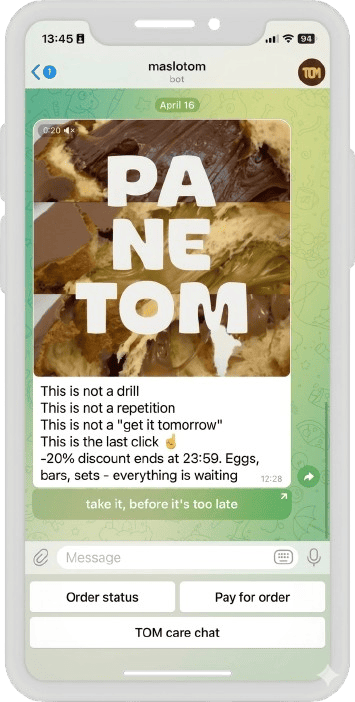
Returns, loyalty balances, store hours, receipts — the routine gets resolved by the bot, and anything genuinely unusual reaches a human with the whole conversation attached, so nobody re-explains their problem. For Maslotom, this pattern handles 80% of incoming requests without an agent. We build it often enough to keep a dedicated customer support chatbots service.
The buying trigger: the same ten questions fill your support queue, and covering evenings and weekends would mean hiring.
-
Loyalty programs in chat: digital card, QR bonuses, cashback
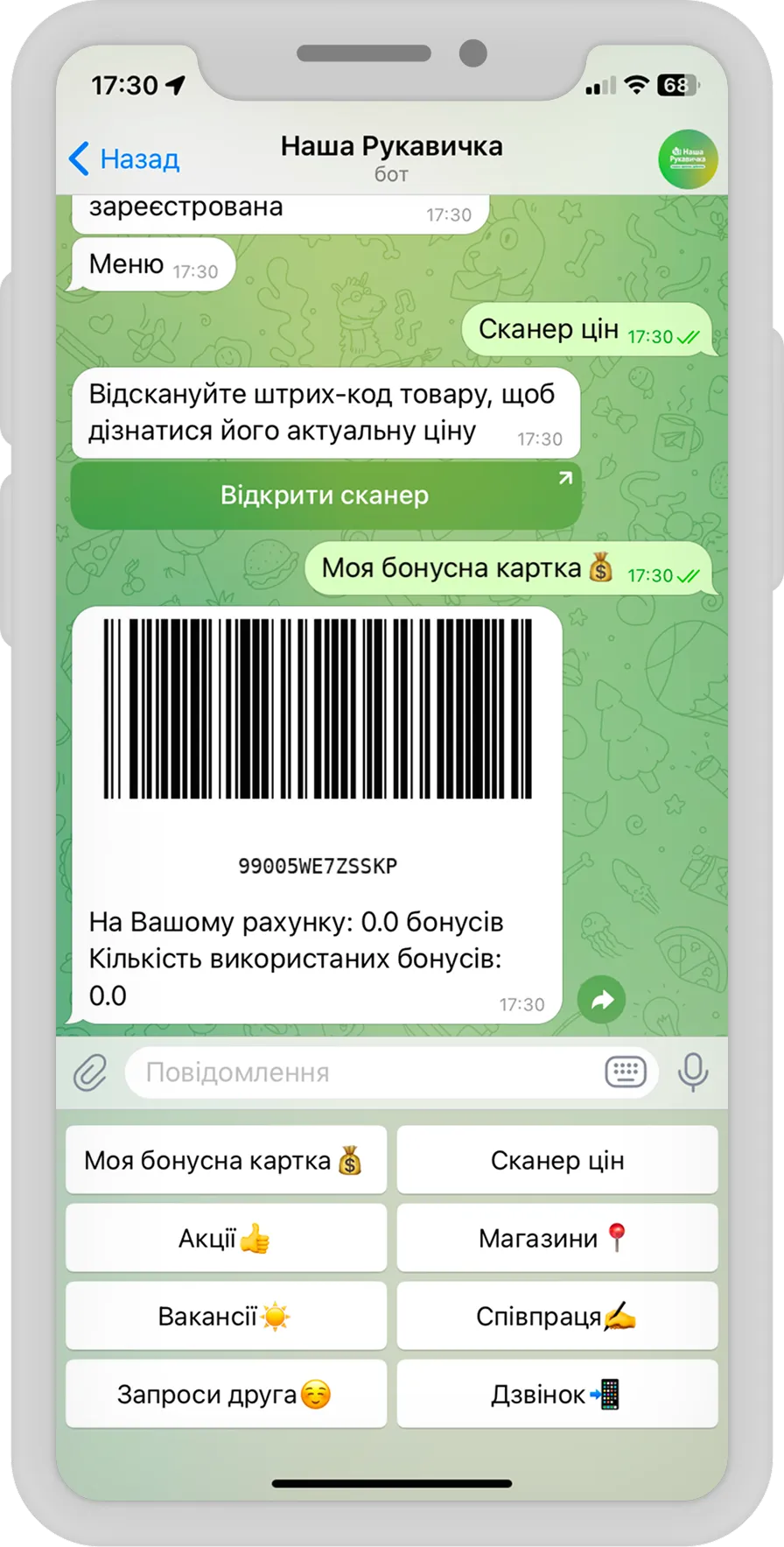
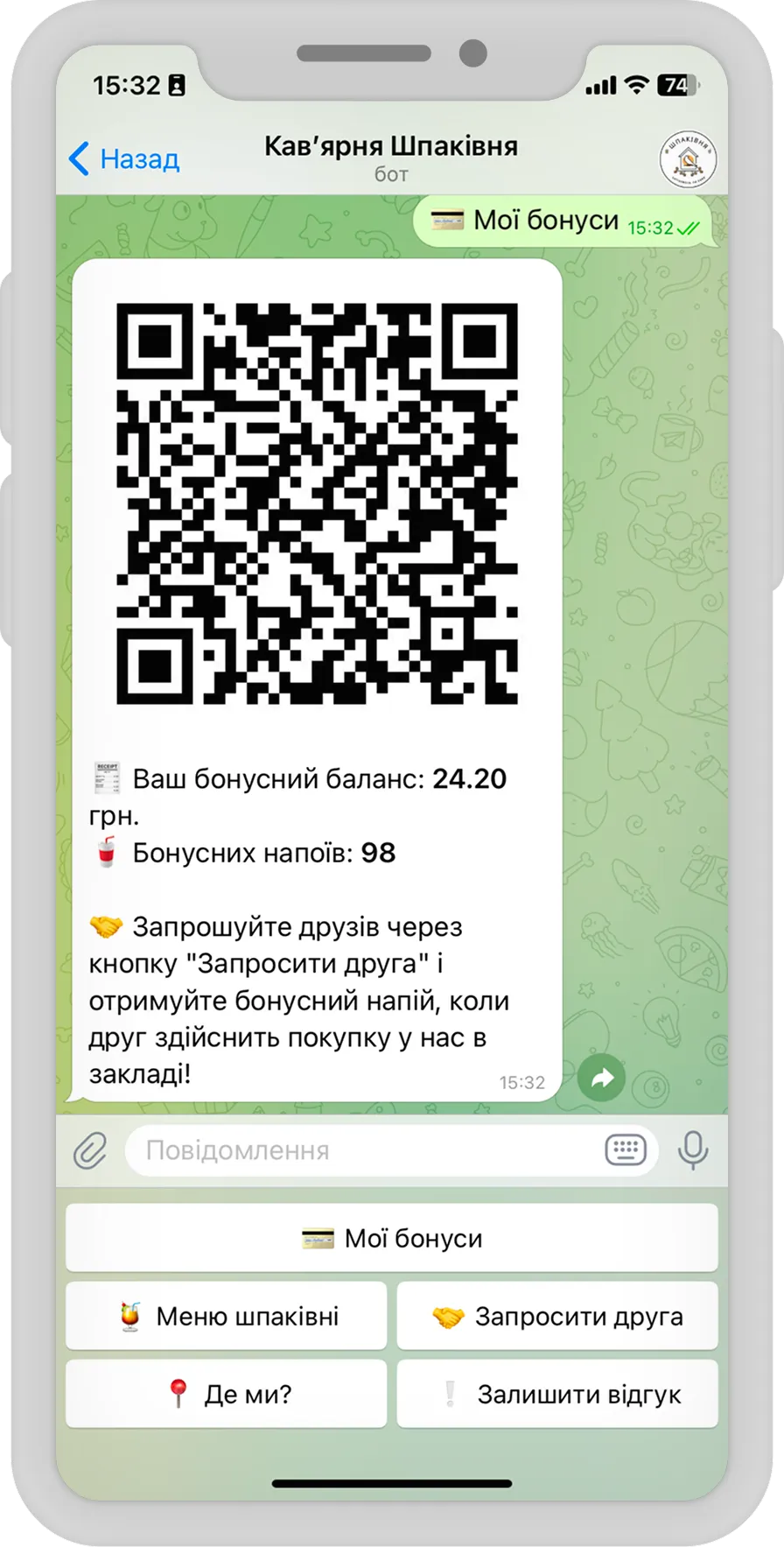
A loyalty bot replaces the plastic card with a card in the customer’s messenger. For Nasha Rukavychka, a Ukrainian retail chain, the bot carries the bonus card, promotions, and referral rewards in one chat. In our loyalty system for cafés, guests scan a personal QR to collect or redeem bonuses, staff apply them in one tap, and everything syncs with Poster POS — while admins control cashback percentages from a dashboard.
The buying trigger: your loyalty program lives on cards people forget, and you have no owned channel to your best customers.
-
Referral programs that recruit the next customer
Both loyalty projects above include referrals: a customer shares a personal link, a friend joins, both get rewarded, and the admin panel controls the logic. It turns your existing customers into an acquisition channel with mechanics you can tune instead of an ad budget you can only raise.
The buying trigger: ad costs keep climbing while your happiest customers have no structured way to bring in the next ones.
-
In-store self-service: barcode price scanner and store finder
A retail bot works inside the store too. The Nasha Rukavychka bot lets shoppers scan any product barcode with their phone and get the price — no hunting for a price-checker terminal or a free employee. Store finders do the same self-service job across a network: the vaping retailer’s bot navigates customers across all 59 locations.
The buying trigger: floor staff spend their day answering price and location questions, and your chain is big enough that “where is the nearest store” has many correct answers.
-
Promotions and targeted broadcasts
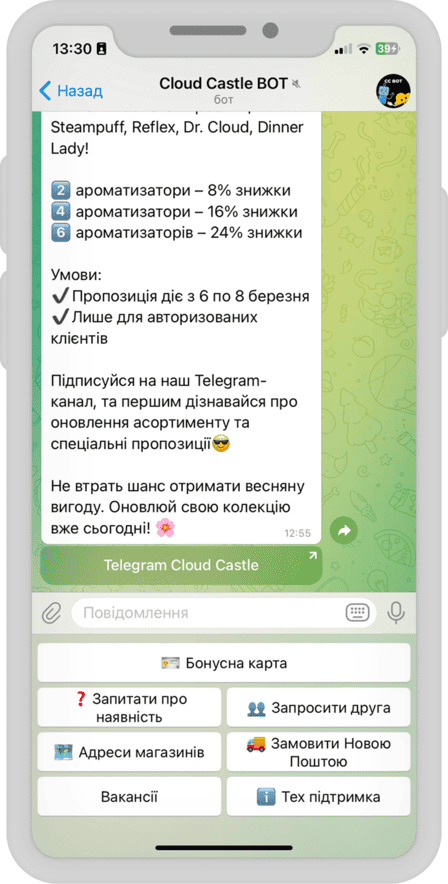
A bot audience is an owned marketing channel. Customers browse active promotions inside the chat, and the admin panel sends targeted broadcasts by segment rather than blasting everyone — the mechanics behind both the Nasha Rukavychka bot and the vaping retailer’s real-time promotion updates. Unlike email, the message lands in an app people actually open.
The buying trigger: your promotions reach customers only through paid ads, and every campaign starts from zero reach.
-
High-consideration purchases: bookings, test drives, financing
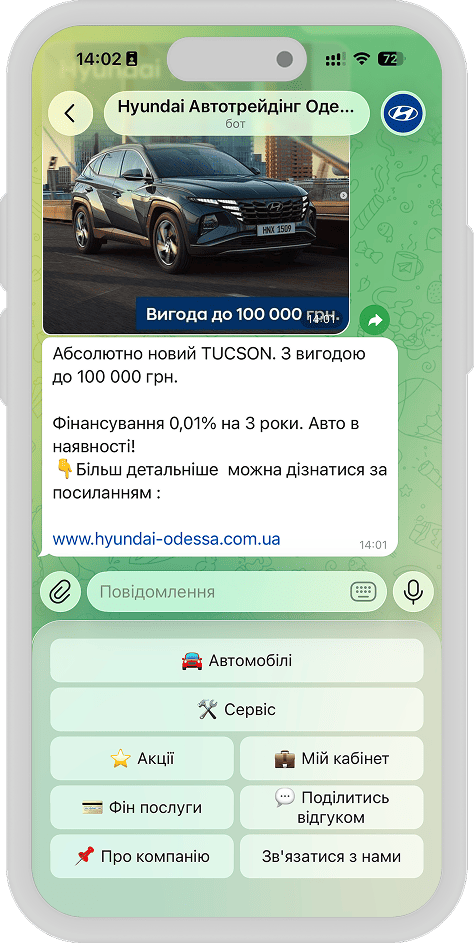
Not everything sells in three taps. Our chatbot platform for automotive dealer networks — launched for Hyundai, Škoda, and Suzuki dealers — walks a customer from browsing the current model lineup to booking a test drive, supports the purchase itself, and offers financing and insurance along the way, with deep integration into dealership stores, CRM, and service platforms. The same pattern fits any retail where the sale needs a scheduled human step.
The buying trigger: your product requires a visit, a consultation, or paperwork, and leads go cold in the gap between interest and appointment.
-
Hiring through the same bot
Retail hires constantly, and the audience already in your bot — customers who like the brand — overlaps heavily with the people you want behind the counter. Both the vaping retailer’s bot and the Nasha Rukavychka bot publish job openings directly in the chat. It costs almost nothing to add and quietly turns a sales channel into a recruiting one.
The buying trigger: frontline turnover is a permanent line item, and job boards charge you for reach you already own.
How to read this list
The highest-figure case on it — $5 million through one chat channel — is not the most technically exotic. It wins because ordering, loyalty, promotions, support, and even hiring live in one bot the customer already has open. So do not buy twelve use cases: buy the two or three whose triggers you recognized while reading, on the one channel your customers already use, and let the rest be phase two. Note also that not every job here needs AI — loyalty mechanics and ordering flows are scripted logic. Where AI genuinely earns its keep first is a question we took apart in our article on AI in recruitment, retail, and support.
Frequently asked questions
What is an AI retail bot?
Think of it as a store employee who lives inside the messenger: it can look up a product, take a payment, check an order, credit a bonus card — because it is wired into the same catalog, CRM, and payment systems your staff use. The difference from a simple FAQ widget is exactly that wiring: it acts on live business data instead of reciting canned answers.
Do retail chatbots actually generate revenue?
The published numbers from our own case bank: over $5 million in revenue and 50,000+ customers through one retail chatbot channel. That is not a guarantee — it is what happened when the bot carried the whole journey, from catalog to payment to loyalty, instead of just answering FAQs. Ordering, cart recovery, and broadcasts drive revenue; the rest of the list protects margin.
Does a retail bot need AI, or is scripted logic enough?
Much of this list is scripted: ordering menus, QR loyalty, referral links, price scanning. AI earns its cost where questions genuinely vary — product discovery in a large catalog and open-ended support. Most good retail bots are hybrids, and if scripted logic covers your task, we will say so in the first call. See our custom chatbot development page for how we scope that split.
How much does a retail chatbot cost?
It depends on which of the use cases above you buy and how deep the integrations go — a single-store loyalty bot and a 59-store commerce platform are different projects. We published a full breakdown of the market ranges and the factors that move a quote in our guide to custom AI chatbot cost in 2026.
Can a retail bot integrate with our POS and CRM?
That integration is usually the point. Our loyalty systems synchronize with Poster POS and CRM so bonuses apply at the counter in real time; the dealer platform exchanges data with dealership stores, CRM, and service systems; and commerce bots read live product feeds for prices and stock. A bot without integrations answers questions; a bot with them runs processes.
Which channel should a retail bot launch on first?
The one your customers already use — that single decision matters more than any feature. Launch on one platform, prove the numbers on two or three use cases, then expand; multi-channel is a fine phase two and an expensive phase one.
Where to go from here
We have been shipping software since 2017, and retail chat is where our case bank runs deepest — chains, café networks, dealer groups, and a bot channel that has generated over $5 million. A project here is a squad, not a vendor: developers plus a product manager as a single point of contact. To find out which of the twelve use cases your numbers actually justify, start at AI retail bots or the AI chatbot development pillar — the first thing we will tell you is which two or three to build first.